 EN
EN

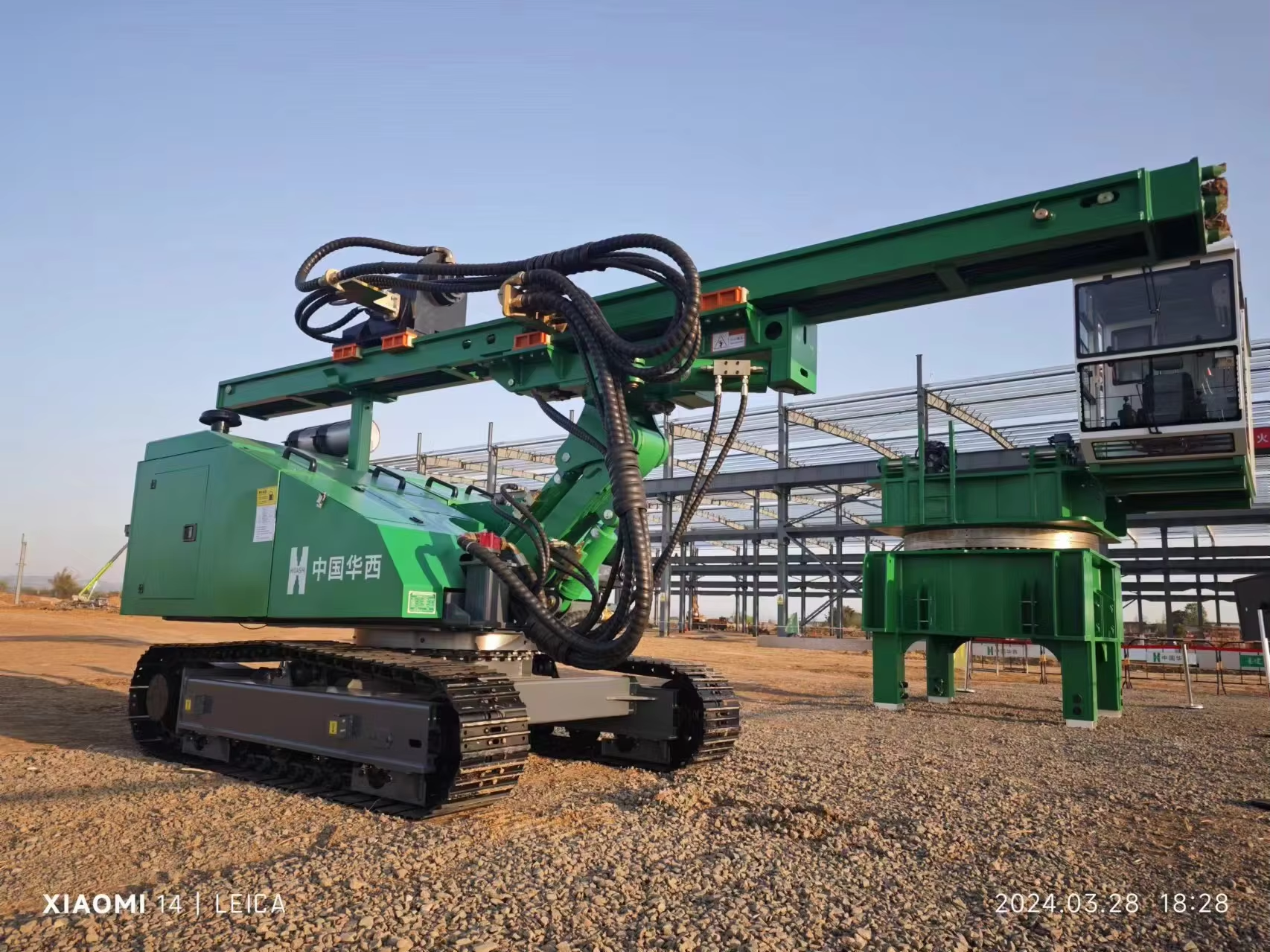
Modern construction and foundation engineering projects demand versatile equipment capable of adapting to diverse soil conditions, project specifications, and operational challenges. Multifunctional rigs have emerged as essential machinery in civil construction, geotechnical engineering, and infrastructure development precisely because of their ability to accommodate multiple interchangeable attachments. Among the most critical attachments that transform standard drilling platforms into comprehensive foundation solutions are augers, hydraulic hammers, and vibratory drivers. These three attachment categories enable multifunctional rigs to perform rotary drilling, impact driving, and vibration installation within a single mobilization, dramatically improving project efficiency and reducing equipment costs. Understanding the capabilities, applications, and selection criteria for these key attachments is fundamental for contractors, project engineers, and equipment managers seeking to maximize the return on investment from their multifunctional rig fleets.
The strategic value of multifunctional rigs lies not merely in their hydraulic power or carrier mobility, but fundamentally in their attachment versatility. A properly configured multifunctional rig equipped with the right combination of augers, hammers, and vibros can address foundation requirements ranging from deep drilled shafts in rock to driven sheet piling in marine environments. This attachment flexibility translates directly into operational advantages including reduced equipment transport costs, faster transition between foundation methods, improved site logistics, and enhanced competitiveness in bidding for projects with mixed foundation requirements. The selection and integration of appropriate attachments requires careful consideration of geological conditions, project specifications, production requirements, and compatibility with the carrier rig's hydraulic capacity and mechanical interface systems.
Understanding Auger Attachments for Multifunctional Rigs
Rotary Drilling Augers and Their Core Functions
Auger attachments represent the most fundamental drilling tools for multifunctional rigs engaged in foundation construction and geotechnical applications. These helical screw devices remove soil through continuous rotation while simultaneously extracting cuttings to the surface through the flights wrapped around the central shaft. Multifunctional rigs equipped with auger attachments can execute continuous flight auger drilling, where the tool remains in the ground throughout the boring process, or segmental auger drilling, where sections are added progressively as depth increases. The rotary drilling method enabled by augers proves especially effective in cohesive soils, soft to medium rock formations, and layered geological conditions where percussion methods would be inefficient or structurally problematic. Modern auger systems designed for multifunctional rigs incorporate wear-resistant cutting teeth, replaceable tooling, and optimized flight pitch to balance penetration rate with spoil removal efficiency across varying soil densities.
The engineering design of auger attachments directly influences the drilling performance and application range of multifunctional rigs. Diameter selection typically ranges from 300mm to over 2000mm depending on foundation design requirements, with larger diameters demanding proportionally greater torque and crowd force from the carrier rig. Flight configuration—whether single, double, or triple helix—affects soil transport efficiency and torque requirements, with tighter pitch flights providing better cutting control in dense materials while wider pitch configurations improve spoil evacuation in loose or saturated conditions. The connection interface between auger and rig must provide both mechanical strength to transmit torque and precise alignment to prevent eccentric loading that accelerates wear and compromises hole verticality. Advanced auger systems for multifunctional rigs now feature integrated sensors for torque monitoring, penetration rate tracking, and depth measurement, enabling real-time optimization of drilling parameters and early detection of subsurface obstructions or unexpected geological transitions.
Specialized Auger Configurations for Diverse Applications
Beyond standard drilling augers, multifunctional rigs accommodate specialized auger configurations tailored to specific foundation engineering challenges. Rock augers incorporate carbide or polycrystalline diamond compact cutting tools capable of penetrating hard limestone, sandstone, and weathered crystalline formations without requiring separate percussion equipment. These heavy-duty attachments demand substantially higher torque capacity from multifunctional rigs and feature reinforced flight structures to withstand the elevated mechanical stresses encountered in competent rock drilling. Hollow-stem augers provide continuous access to the borehole bottom throughout the drilling process, enabling simultaneous advancement and sampling operations critical for geotechnical investigation programs or installation of monitoring instrumentation. The hollow central passage allows insertion of sampling tools, installation of casing, or placement of grout while the auger remains in position, significantly streamlining complex foundation construction sequences.
Casing drive systems represent another critical auger variant for multifunctional rigs operating in challenging ground conditions. These specialized attachments combine rotary cutting with simultaneous casing advancement, preventing borehole collapse in unstable soils, loose granular materials, or water-bearing formations. The casing drive auger rotates inside a steel casing tube while cutting teeth at the leading edge simultaneously excavate soil and advance the protective casing, maintaining borehole stability without requiring drilling fluid or temporary support systems. This method proves invaluable for multifunctional rigs working in urban environments where groundwater control and adjacent structure protection are paramount concerns. Bucket augers provide yet another specialized capability, featuring bottom-opening containers that capture soil samples or remove obstructions from boreholes, expanding the functional envelope of multifunctional rigs beyond pure drilling into comprehensive foundation problem-solving platforms.
Hydraulic Hammer Attachments and Impact Driving Capabilities
Impact Energy Transfer in Hydraulic Hammers
Hydraulic hammers transform multifunctional rigs into powerful impact driving machines capable of installing piles, sheet piling, and ground improvement elements through repeated high-energy blows. Unlike rotary augers that rely on continuous torque application, hydraulic hammers generate foundation penetration through kinetic energy transfer from a falling or hydraulically accelerated ram to the pile head. Modern hydraulic hammers mounted on multifunctional rigs utilize closed hydraulic circuits to accelerate a heavy piston that strikes an anvil or directly impacts the pile, converting the carrier rig's hydraulic flow and pressure into concentrated impact energy ranging from a few thousand joules for light applications to over 200,000 joules for heavy marine and infrastructure projects. The impact frequency, energy per blow, and total driving force must be carefully matched to pile characteristics, soil resistance profiles, and structural capacity of the driven elements to achieve optimal installation without damaging the pile or creating unacceptable ground vibrations.
The integration of hydraulic hammers with multifunctional rigs requires sophisticated matching of hammer specifications to carrier capabilities. Hydraulic flow rate, system pressure, and available power directly constrain hammer selection, as undersized hydraulic systems cannot maintain the required impact frequency while oversized hammers may exceed the structural capacity of the rig's leader or mast system. Modern multifunctional rigs designed for hammer operation incorporate dedicated hydraulic circuits with accumulator systems that store energy between blows, enabling higher peak power delivery than continuous flow alone could provide. The leader system must provide precise alignment throughout the driving process, as lateral deviation during impact generates bending stresses that can refuse piles or cause structural failure. Advanced multifunctional rigs incorporate electronic hammer control systems that adjust impact energy based on real-time penetration resistance, optimizing driving efficiency while protecting both pile and equipment from damage caused by excessive blow energy or inadequate cushioning.
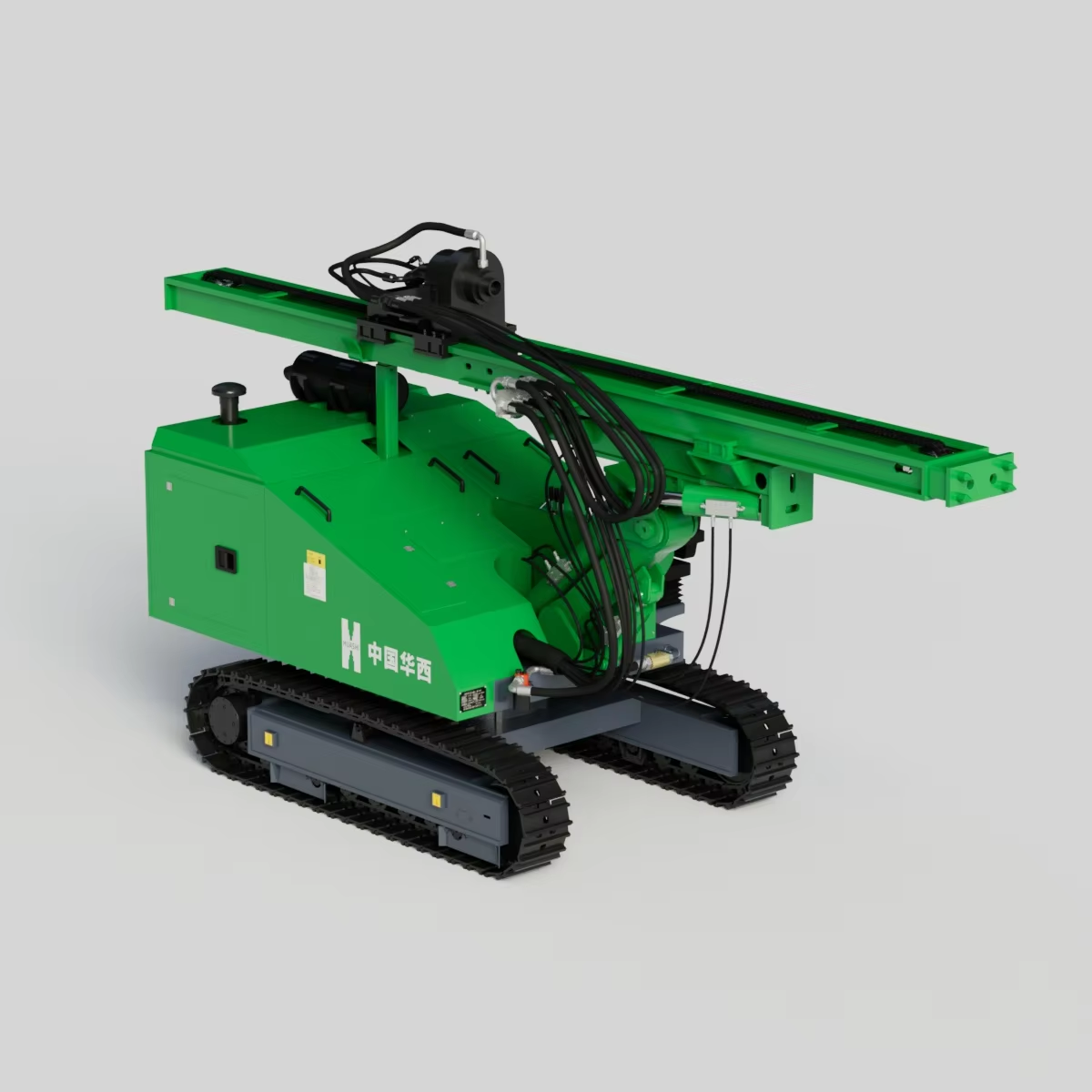
Application Range and Pile Driving Performance
Hydraulic hammer attachments extend the application envelope of multifunctional rigs into foundation installation methods fundamentally different from drilled systems. Driven steel H-piles, pipe piles, and precast concrete piles can be installed rapidly in suitable soil conditions, often achieving higher bearing capacity than equivalent drilled elements due to soil densification around the pile shaft during driving. Sheet pile installation for retaining walls, cofferdams, and waterfront structures represents another major application where hydraulic hammers on multifunctional rigs provide essential capabilities. The continuous interlocking joints of sheet pile systems require precise verticality control and consistent driving force—capabilities that modern multifunctional rigs with integrated hammer systems deliver more reliably than traditional crane-suspended hammer configurations. Ground improvement techniques including dynamic compaction and installation of stone columns also utilize hammer attachments on multifunctional rigs, demonstrating the breadth of geotechnical applications enabled by impact energy delivery.
Performance optimization of hydraulic hammers on multifunctional rigs requires understanding the complex interaction between hammer characteristics, pile properties, and soil response. Pile driving analyzers now commonly integrate with multifunctional rig control systems, providing real-time measurement of transferred energy, pile stresses, and bearing capacity indicators during installation. This data enables dynamic adjustment of hammer settings to maximize installation efficiency while ensuring pile integrity and achieving specified capacity. Vibration monitoring systems protect adjacent structures and ensure compliance with environmental restrictions, particularly critical when multifunctional rigs operate in urban settings or near sensitive facilities. The combination of precise positioning control inherent in modern multifunctional rigs with sophisticated hammer monitoring creates installation quality levels previously unattainable with conventional pile driving equipment, reducing the need for test piling and improving foundation reliability across diverse project conditions.
Vibratory Driver Attachments and Oscillation Installation Methods
Vibratory Energy Principles and Equipment Design
Vibratory drivers represent the third essential attachment category that completes the foundation installation capabilities of multifunctional rigs. These sophisticated devices generate high-frequency oscillations that temporarily reduce soil resistance around driven elements, enabling installation with dramatically lower required force compared to impact driving methods. The core mechanism consists of eccentric weights rotating in synchronized or counter-rotating configurations, creating sinusoidal force waves transmitted through the pile or sheet pile into the surrounding soil. This oscillatory energy liquefies cohesionless soils and temporarily disrupts the structure of cohesive materials, allowing gravity and a modest static crowd force from the multifunctional rig to advance the element. Vibratory frequency typically ranges from 1200 to 2400 vibrations per minute with amplitude settings adjusted based on soil conditions and pile characteristics, while centrifugal force generation can exceed 500 kN in heavy vibros designed for large-diameter piles or deep sheet pile installations.
The integration of vibratory attachments with multifunctional rigs creates installation systems particularly effective in granular soils where impact driving would be inefficient or generate unacceptable ground vibrations. Modern vibros mounted on multifunctional rigs incorporate variable moment systems allowing adjustment of eccentric force during operation, optimizing performance as soil conditions change with depth. Hydraulic power from the carrier rig drives the vibrator motor while the mast or leader system provides crowd and extraction force, guidance, and verticality control. The combination of controlled vibration with precise positioning capability enables multifunctional rigs equipped with vibratory attachments to install sheet piling with exceptional accuracy, critical for waterfront structures where joint continuity and water-tightness depend on maintaining proper alignment throughout driving. Electronic monitoring systems track vibration parameters, penetration rate, and power consumption, providing operators with real-time feedback for parameter optimization and early warning of refusal conditions or equipment issues.
Sheet Pile Installation and Ground Treatment Applications
Sheet pile installation represents the primary application driving vibratory attachment adoption for multifunctional rigs across marine construction, flood control, and temporary excavation support projects. The continuous interlocking profile of sheet pile systems demands installation methods that minimize lateral deviation while advancing elements to design depth through variable soil conditions. Vibratory drivers on multifunctional rigs meet these requirements by providing consistent oscillatory force that maintains engagement with previously installed sheets while progressively penetrating to final elevation. The reduced installation force compared to impact methods proves especially valuable when driving through existing fill materials or urban subsurface environments where obstructions and variable density create challenging conditions. Multifunctional rigs equipped with vibratory attachments can rapidly install hundreds of linear meters of sheet piling per shift in favorable conditions, dramatically accelerating project schedules compared to alternative methods.
Beyond sheet pile applications, vibratory attachments extend multifunctional rig capabilities into specialized ground treatment and foundation installation techniques. Vibro-compaction for soil densification utilizes the oscillatory energy to rearrange granular soil particles into denser configurations, improving bearing capacity and reducing settlement potential across large site areas. Installation of large-diameter steel pipe piles for offshore structures, bridges, and industrial facilities benefits from vibratory driving in suitable subsurface conditions, with multifunctional rigs providing the necessary alignment control and extraction capability for pile positioning and adjustment. Certain vibratory attachments incorporate integrated clamping systems that enable multifunctional rigs to extract previously driven elements, supporting temporary works removal and value recovery from sheet pile cofferdams. The versatility of vibratory technology combined with the positioning precision and power delivery of modern multifunctional rigs creates foundation installation capabilities adaptable to an exceptionally broad range of project requirements and site conditions.
Selection Criteria and Compatibility Considerations
Matching Attachments to Rig Capabilities
Successful deployment of augers, hammers, and vibros on multifunctional rigs requires careful matching of attachment specifications to carrier machine capabilities. Hydraulic flow rate and pressure represent the primary constraints, as each attachment type demands specific hydraulic power to achieve rated performance. Auger systems require continuous high-torque delivery with flow rates often exceeding 200 liters per minute for large-diameter applications, while hydraulic hammers need high-pressure flow with accumulator support for peak energy delivery. Vibratory drivers demand consistent hydraulic power to maintain operating frequency under varying soil resistance. Multifunctional rigs designed for true attachment versatility incorporate multiple independent hydraulic circuits with variable displacement pumps and pressure compensation, enabling simultaneous operation of positioning, rotation, and attachment functions without performance degradation. The structural capacity of the rig's leader or mast system must also accommodate the weight, dimensions, and operational forces of the intended attachments without exceeding design limits for bending moments, compression loads, or lateral stability.
Interface standardization represents another critical consideration when selecting attachments for multifunctional rigs. Leading manufacturers have developed proprietary quick-coupling systems enabling rapid attachment changes with minimal manual intervention, but compatibility verification remains essential when mixing equipment from different suppliers. Mechanical interfaces must transmit torque, thrust, and impact forces reliably while maintaining precise alignment throughout operation. Hydraulic quick couplers must prevent contamination during connection while ensuring leak-free operation under full system pressure. Electronic interfaces for monitoring and control increasingly integrate attachment sensors with rig operating systems, requiring protocol compatibility and software integration. Forward-thinking equipment specifications for multifunctional rigs include detailed attachment compatibility matrices defining approved combinations of carriers and attachments with documented performance parameters, ensuring operators can confidently select appropriate tools for specific project requirements without risking equipment damage or substandard productivity.
Operational Efficiency and Project Economics
The economic justification for investing in comprehensive attachment suites for multifunctional rigs extends beyond simple equipment capability to encompass project-level efficiency improvements and strategic market positioning. A single multifunctional rig equipped with interchangeable augers, hammers, and vibros can address diverse foundation requirements within a single project mobilization, eliminating the cost and schedule impact of bringing multiple specialized machines to site. This attachment flexibility proves particularly valuable on projects with mixed foundation systems—for example, drilled shafts in competent bearing strata combined with driven sheet pile for excavation support or vibratory-installed temporary piling for construction access. The reduction in equipment transport, setup time, and site footprint directly improves project economics while reducing environmental impact and site disruption. Contractors equipped with versatile multifunctional rigs gain competitive advantages in bidding complex projects where foundation method flexibility provides value engineering opportunities or risk mitigation strategies.
Lifecycle cost analysis for multifunctional rig attachment investments must consider utilization patterns, maintenance requirements, and residual value across typical equipment ownership periods. High-quality augers with replaceable cutting tools and wear-resistant flights may command premium initial pricing but deliver lower per-meter drilling costs through extended service intervals and reduced downtime. Hydraulic hammers with sophisticated control systems and integrated monitoring reduce pile damage rates and improve installation quality, potentially eliminating costly repairs or supplemental foundation work. Vibratory drivers with variable moment capability adapt to changing site conditions without requiring multiple attachment sizes, improving fleet efficiency and reducing inventory carrying costs. Modern multifunctional rigs increasingly incorporate telematics systems that track attachment usage, monitor maintenance intervals, and document production rates, enabling data-driven decisions about fleet composition, maintenance scheduling, and equipment replacement timing that optimize total cost of ownership across diverse project portfolios.
FAQ
What are the primary advantages of using multifunctional rigs with interchangeable attachments compared to dedicated single-purpose machines?
Multifunctional rigs with interchangeable attachments offer several compelling advantages over fleets of dedicated machines. The most immediate benefit is reduced equipment mobilization and demobilization costs, as a single carrier rig can perform multiple foundation installation methods by changing attachments rather than requiring transport of separate specialized machines. This capability dramatically reduces project setup time and site congestion, particularly valuable in urban environments or projects with limited access. The capital investment required to equip a multifunctional rig with multiple attachments typically costs substantially less than purchasing equivalent dedicated machines, improving equipment ROI and fleet efficiency. Additionally, operators gain broader skill sets by working with multifunctional platforms, improving workforce versatility and reducing scheduling constraints. The ability to switch installation methods in response to unexpected subsurface conditions provides valuable risk mitigation, allowing contractors to adapt foundation approaches without major cost or schedule impacts when geological conditions differ from design assumptions.
How do soil conditions influence the selection between auger, hammer, and vibratory attachments for foundation installation projects?
Soil characteristics fundamentally determine the optimal attachment selection for multifunctional rigs on any given project. Cohesive soils including clays and silts respond well to auger drilling methods, as the rotary cutting action effectively excavates these materials while the flight configuration efficiently transports cuttings to surface. Granular soils such as sands and gravels prove ideal for vibratory installation methods, as the oscillatory energy temporarily liquefies these materials and dramatically reduces penetration resistance. Dense granular deposits and decomposed rock formations often require hydraulic hammer attachments to achieve adequate penetration, as the impact energy overcomes high bearing resistance that would stall rotary or vibratory methods. Mixed soil profiles with alternating layers may necessitate attachment changes during installation or selection of versatile approaches like casing drive augers that maintain borehole stability across varying conditions. Groundwater conditions also influence attachment selection, with certain auger configurations providing better performance in saturated conditions while vibratory methods may lose effectiveness in fully submerged granular materials where buoyancy reduces effective stress.
What maintenance practices are essential for maximizing the service life and performance of auger, hammer, and vibratory attachments?
Preventive maintenance represents the cornerstone of reliable attachment performance and acceptable lifecycle costs for multifunctional rig accessories. Auger attachments require regular inspection of cutting teeth for wear patterns indicating improper rotation or excessive side loading, with replacement before complete failure preventing damage to the flight structure and maintaining optimal penetration rates. Flight welds and center shaft connections demand periodic non-destructive testing to detect fatigue cracks before catastrophic failure occurs during operation. Hydraulic hammer maintenance focuses on impact surface inspection, cushion condition monitoring, and hydraulic seal replacement according to manufacturer intervals, as degraded cushioning or hydraulic leakage rapidly accelerates wear and reduces energy transfer efficiency. Vibratory driver maintenance emphasizes bearing condition monitoring, eccentric weight inspection, and isolation system integrity, as bearing failure or weight damage creates severe vibration imbalance that can destroy the unit and damage the carrier rig. All attachments benefit from systematic documentation of operating hours, production volumes, and ground conditions encountered, enabling predictive maintenance scheduling and informed decisions about component replacement timing versus complete attachment renewal.
Can multifunctional rigs equipped with these attachments effectively compete with specialized equipment in terms of productivity and installation quality?
Modern multifunctional rigs with properly selected attachments routinely achieve productivity and quality levels comparable to or exceeding dedicated specialized equipment across most foundation applications. Advances in hydraulic system design, control technology, and attachment engineering have eliminated historical performance gaps that once favored purpose-built machines. High-torque rotary heads on contemporary multifunctional rigs deliver auger performance matching dedicated drilling rigs in equivalent diameter ranges, while integrated monitoring systems provide superior quality control through real-time parameter tracking. Hydraulic hammers designed specifically for multifunctional rig mounting now rival crane-suspended systems in energy delivery while offering superior alignment control through rigid leader guidance. Vibratory attachments on multifunctional rigs provide installation accuracy and production rates competitive with dedicated vibratory equipment while adding positioning versatility unavailable in simpler configurations. The key performance differentiator lies in proper specification matching rather than equipment category—an appropriately sized multifunctional rig with quality attachments will outperform undersized dedicated equipment, while conversely, a mismatched attachment on an inadequate carrier will disappoint regardless of theoretical capabilities. Successful contractors focus on comprehensive system specification encompassing carrier capabilities, attachment ratings, and application requirements rather than assuming either equipment category holds inherent performance advantages.
Table of Contents
- Understanding Auger Attachments for Multifunctional Rigs
- Hydraulic Hammer Attachments and Impact Driving Capabilities
- Vibratory Driver Attachments and Oscillation Installation Methods
- Selection Criteria and Compatibility Considerations
-
FAQ
- What are the primary advantages of using multifunctional rigs with interchangeable attachments compared to dedicated single-purpose machines?
- How do soil conditions influence the selection between auger, hammer, and vibratory attachments for foundation installation projects?
- What maintenance practices are essential for maximizing the service life and performance of auger, hammer, and vibratory attachments?
- Can multifunctional rigs equipped with these attachments effectively compete with specialized equipment in terms of productivity and installation quality?