 EN
EN

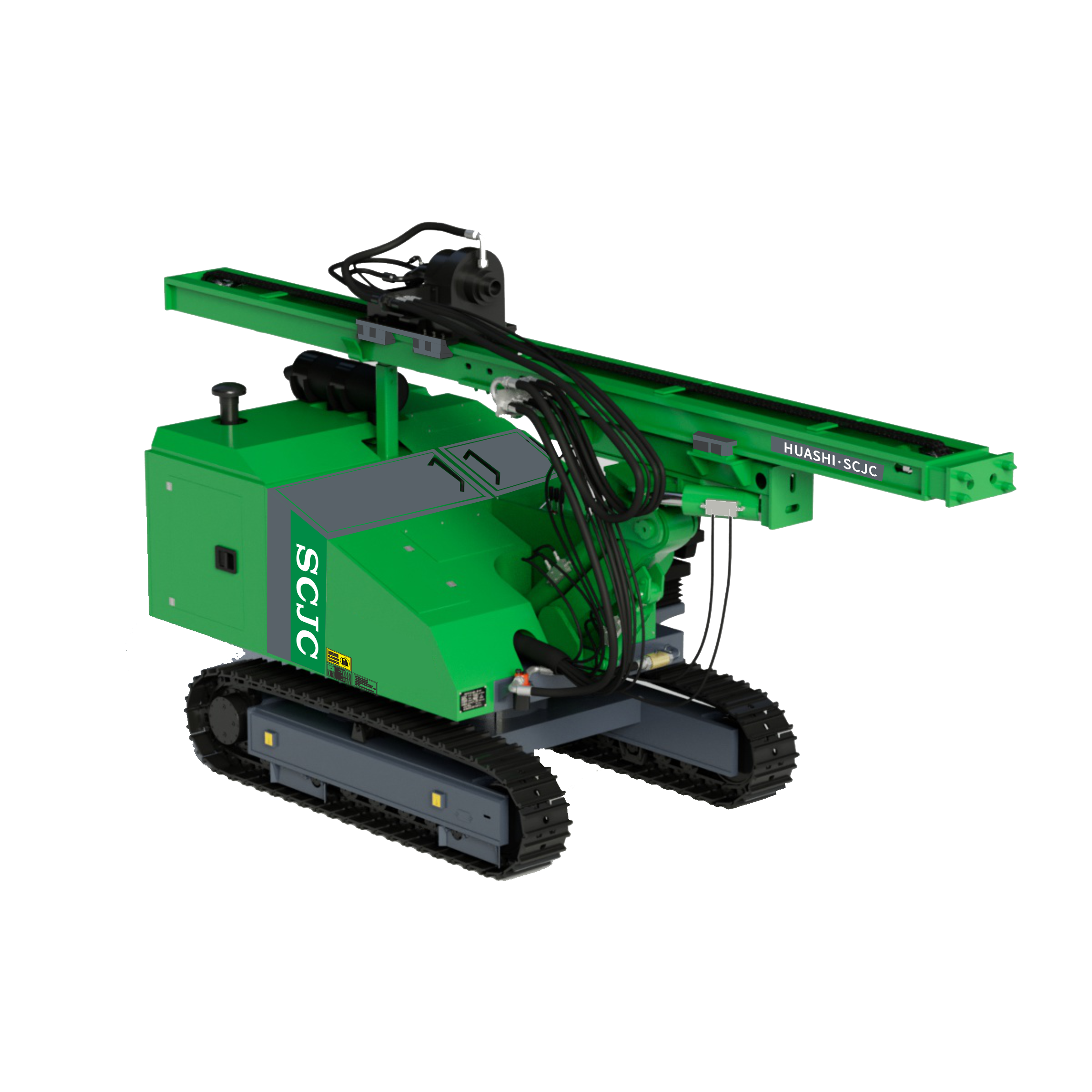
Vibratory Pile Driving: High-Efficiency Installation with Low-Noise Machinery
How Vibratory Machines Transfer Resonant Energy to Reduce Soil Resistance
Vibratory pile drivers use counter-rotating eccentric weights to generate vertical oscillations, transmitting resonant energy directly into the pile. This motion induces temporary liquefaction in granular soils or breaks cohesive bonds in clays, reducing skin friction by up to 70% (PileTech 2023). By matching the machine’s frequency to the soil’s natural resonance—typically 20–40 Hz for sands—operators achieve smoother penetration with minimal displacement. The reduced ground disturbance makes this method ideal for urban projects near existing infrastructure, wetlands, or seismic zones where traditional impact driving risks structural damage. Modern variants incorporate active noise cancellation, maintaining sound levels below 85 dB to comply with OSHA standards.
Key Machine Specifications: Frequency Range, Amplitude, and Clamping Force for Optimal Performance
Three specifications dictate vibratory driver effectiveness:
- Frequency range (15–50 Hz): Higher frequencies optimize sandy soils; lower ranges (15–25 Hz) target cohesive layers.
- Amplitude (5–25 mm): Greater displacement overcomes denser strata but requires counterbalance systems to stabilize the rig.
- Clamping force (300–5,000 kN): Must exceed the pile’s tensile strength to prevent slippage during extraction cycles.
Field studies show that tuning these parameters to site-specific geotechnical data can accelerate installation by 40% while reducing fuel consumption. For example, a resonant frequency match in medium-dense sand decreases required centrifugal force by 30%, extending machine longevity and cutting operational costs.
Impact Pile Driving: Dynamic Energy Delivery and Heavy-Duty Machinery Trade-offs
Energy Transfer Mechanics: Drop, Diesel, and Hydraulic Hammers Compared
Impact pile driving converts kinetic energy into driving force through three primary hammer types. Drop hammers use gravity-driven weights, delivering consistent energy ideal for uniform soils but limited by height constraints. Diesel hammers combust fuel to create explosive downward force—particularly effective in granular soils due to high energy per strike. Hydraulic hammers employ pressurized fluid systems to generate adjustable blow energy and frequency, providing precision control in variable conditions. Hydraulic systems achieve up to 85% energy transfer efficiency through controlled stroke mechanics, while diesel hammers lose approximately 15% of energy to heat dissipation. Optimal hammer selection balances soil resistance, required penetration depth, and structural pile capacity.
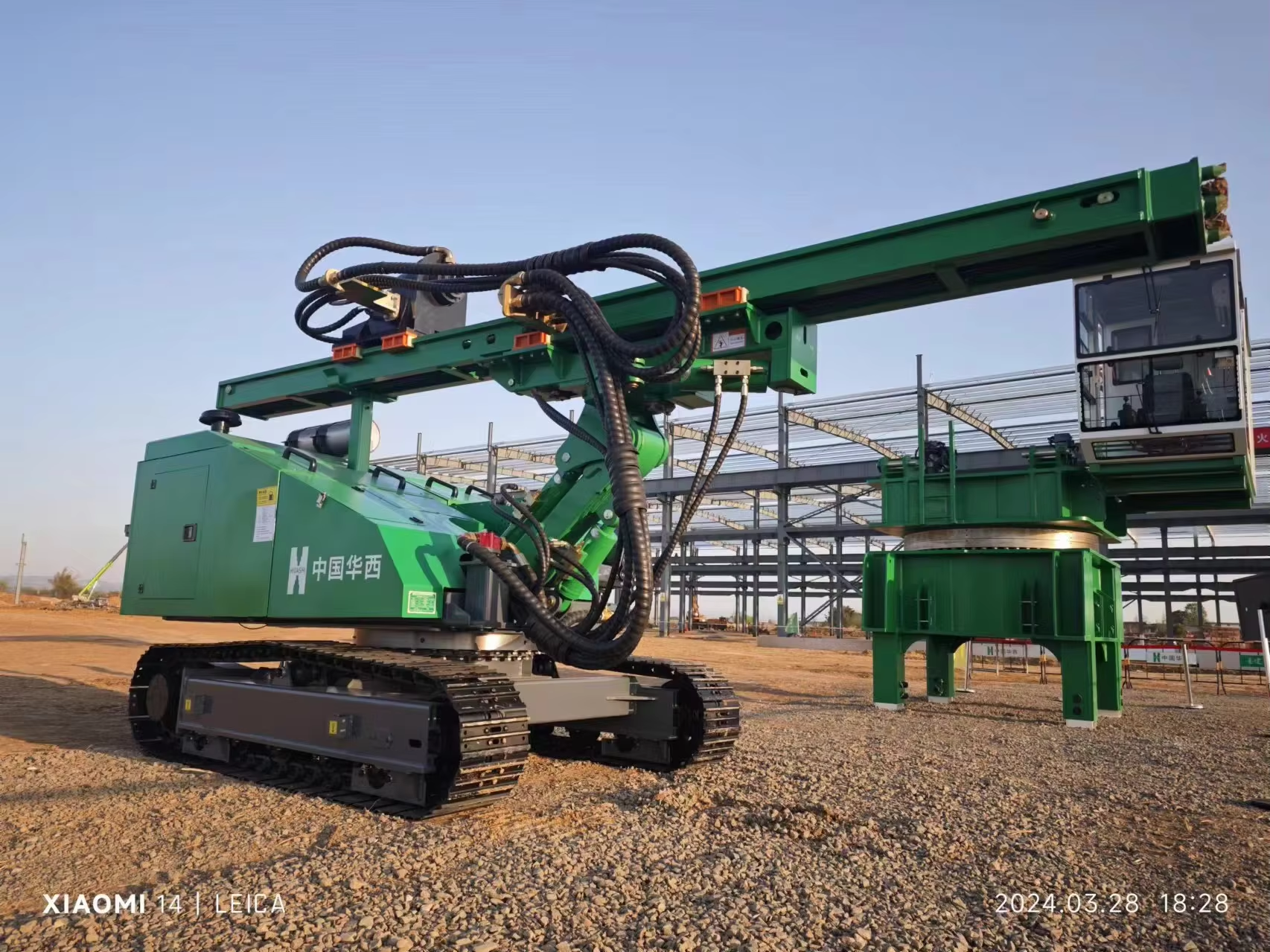
Machine Limitations: Noise, Vibration, and Penetration Challenges in Dense or Layered Soils
Heavy impact machinery faces operational constraints in challenging geotechnical environments. Noise emissions frequently exceed 120 dB(A), surpassing OSHA permissible exposure limits within 15 meters of operation. Ground vibrations propagate at 5–50 mm/s velocities, risking adjacent structure damage without isolation trenches or wave barriers. Penetration resistance escalates exponentially in dense soils—where SPT-N values exceed 50 blows/foot—causing refusal incidents in 30% of projects using standard impact hammers. Layered strata compound these issues; abrupt transitions between sand lenses and clay layers induce pile deflection in 22% of cases. These limitations necessitate supplemental techniques like pre-drilling or soil displacement tools, increasing project costs by 15–40% according to 2023 geotechnical case studies.
Drilling-and-Driving (Bored Piling): Hybrid Machinery for Precision and Integrity
CFA vs. Rotary Bored + Casing: Machinery Requirements and Concrete Placement Control
Continuous Flight Auger (CFA) rigs use a hollow-stem auger drilled rapidly to depth. Concrete is pumped through the auger as it withdraws, eliminating casing needs. This suits granular soils but risks necking in cohesive layers. Rotary bored rigs require oscillators or vibrators to drive temporary casings through unstable or waterlogged ground. Concrete placement via tremie pipe ensures integrity in submerged conditions.
| Method | Key Machinery | Soil Suitability | Concrete Placement |
|---|---|---|---|
| CFA | Hollow-stem auger rigs | Granular soils | Pumped through auger |
| Rotary Bored | Oscillator + casing systems | Unstable/waterlogged | Tremie pipe immersion |
CFA’s speed (up to 40 m/day) reduces project timelines, while rotary methods offer superior control in complex strata. Machine choice hinges on soil reports and groundwater levels.
Press-In (Jacking) Pile Driving: Silent, Static Installation Using High-Capacity Jacking Machinery
Machinery Design Essentials: Reaction Frame Stability, Hydraulic Pressure, and Real-Time Load Monitoring
Press-in machines install piles through continuous static force—eliminating vibration and noise. This method relies on three critical engineering elements:
First, the reaction frame transfers opposing forces into stable ground or existing structures. Its rigid design prevents deflection during high-load operations, ensuring precise pile alignment even in variable soils. Weak foundations can reduce installation speeds by 40% (Geotech Journal 2023).
Second, hydraulic jacks generate the primary driving force. These systems convert fluid pressure into linear thrust, typically ranging from 200–4,000 tons. Operators adjust pressure dynamically to overcome soil resistance—granular layers may require 30% higher force than cohesive soils. This granular control prevents pile damage common in impact driving.
Third, real-time load monitoring is integral to modern jacking machines. Embedded sensors track axial force distribution, pile inclination deviations, and hydraulic pressure fluctuations. Continuous data feeds allow immediate corrections, reducing installation errors by up to 70% compared to manual methods. This precision is vital when working near sensitive infrastructure where ground movement must stay below 5 mm.
FAQ
What is vibratory pile driving?
Vibratory pile driving is a method that uses vibratory machines to transmit resonant energy into piles, reducing soil resistance and allowing for smoother penetration. It is particularly effective in granular soils.
How does impact pile driving differ from vibratory pile driving?
Impact pile driving involves using hammers (drop, diesel, or hydraulic) to drive piles by converting kinetic energy. It is generally used in situations where dynamic energy delivery is required, whereas vibratory pile driving is quieter and reduces soil resistance through resonance.
What are the advantages of using press-in pile driving?
Press-in pile driving uses static force to install piles silently and with minimal vibration, ideal for sensitive or urban environments. It ensures precise alignment and reduces installation errors significantly compared to traditional methods.
Table of Contents
- Vibratory Pile Driving: High-Efficiency Installation with Low-Noise Machinery
- Impact Pile Driving: Dynamic Energy Delivery and Heavy-Duty Machinery Trade-offs
- Drilling-and-Driving (Bored Piling): Hybrid Machinery for Precision and Integrity
- Press-In (Jacking) Pile Driving: Silent, Static Installation Using High-Capacity Jacking Machinery
- FAQ