 EN
EN

Understanding Flat Top Tower Cranes and Their Role in Lifting Capacity
What Defines a Flat Top Tower Crane?
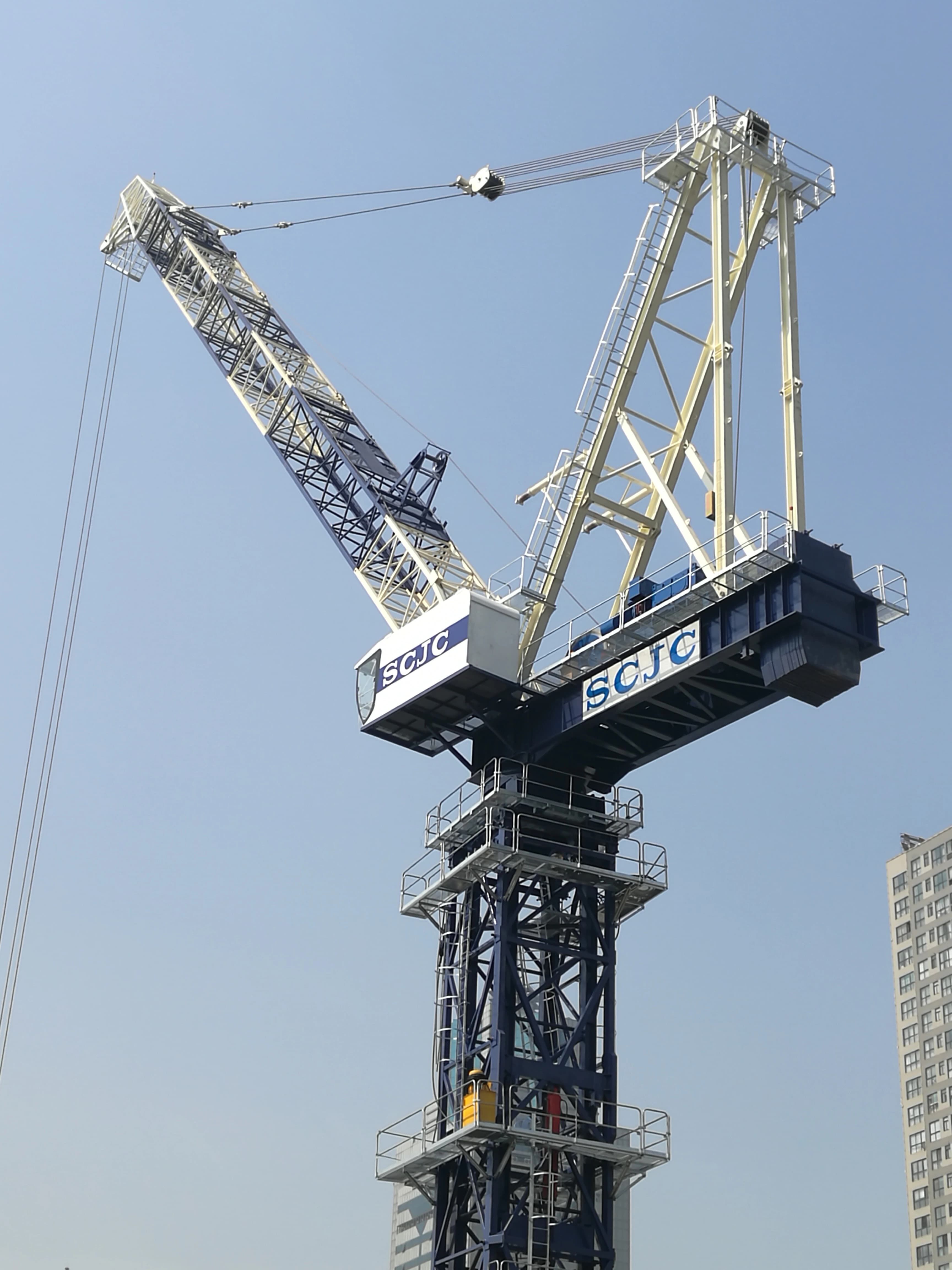
The flat top design of these tower cranes gets rid of those old fashioned A-frames or cat heads sitting on top of the tower, which means they can fit much better in tight spaces where construction sites get crowded. The way these cranes are built in modules makes them easier to transport from place to place and quicker to put together on site. Plus, since they don't stick out as high vertically, several of them can work in areas that overlap without bumping into each other. What's inside? Basically three main parts: the long arm that extends horizontally called a jib, some heavy counterweights to balance things out, and a stable mast that stands straight up. Newer versions today can lift over 64 tons according to the International Crane Foundation folks, so they're actually catching up pretty well with the older hammerhead style cranes when it comes to lifting power.
Advantages of Flat Top Design in Urban and Congested Sites
Flat top cranes take up much less space on site, which is a big plus when working in crowded city areas where every square foot counts. These cranes need about 15 to 20 percent less headroom than standard models, something that really matters for construction sites close to airport runways or next to tall buildings going up. According to recent industry research from last year, around six out of ten contractors now go for flat tops specifically for skyscraper work because they can swing around without bumping into neighboring buildings. Another advantage worth mentioning is the reduced number of control cables these cranes have. This means lower maintenance expenses overall, typically saving between 12 and 18 percent compared to those old fashioned A-frame crane setups that still get used occasionally.
How Design Influences Setup Efficiency and Lifting Performance
Getting rid of the traditional A-frame design cuts down on assembly time by around 30%, according to Vertikal's 2024 research findings, which definitely speeds things up when getting projects ready to go. What makes this possible is the jib's strengthened lattice construction that actually replaces those extra support braces we used to need, yet still keeps everything stable even when extended fully out. Most major equipment makers now include boom angle sensors along with load moment indicators as standard features. These help maintain between 89% and 93% of the crane's full lifting capability no matter where it needs to reach. Take for instance a typical 40 ton flat top crane model. At about 20 meters away from its base point, such a machine could handle roughly 35 tons worth of cargo while staying within all the ISO 12485 safety requirements.
Decoding the Crane Load Chart: Core Tool for Capacity Planning
How to Read Load Charts for Accurate Lift Planning
- Identify the working radius: Measure horizontal distance from crane center to load.
- Cross-reference boom length/angle: Match radius to intersecting values in the chart’s grid.
- Apply deductions: Subtract rigging gear weight (typically 2—5% of gross load).
- Verify stability: Ensure final capacity is at least 1.25x the planned load (OSHA 1926.1407 safety margin).
Misalignment between chart data and field conditions causes 34% of lifting incidents (CICIS 2022).
Case Study: Consequences of Misreading a Load Chart
In the middle of a bridge construction project in Houston back in 2021, workers made a critical mistake when they applied load calculations meant for an 180 foot boom to equipment set up for 210 feet instead. When a massive 22 ton concrete piece was lifted, it turned out to be 17% over the safe limit, which caused the whole setup to tilt at about 3 degrees before anyone could trigger the emergency stop system. Looking into why this happened revealed several problems nobody had considered. First off, there was this unexpected 12 foot expansion in radius that wasn't factored in anywhere. Then came the missing 1.8 tons worth of rigging weight that should have been subtracted from the total calculation. And finally, someone got confused by what the "auxiliary mode" button actually did on their control panel. After reviewing similar incidents, investigators found that nearly nine out of ten mistakes like this one happened because charts overlapped confusingly or decimals got misplaced somewhere along the line.
Working Radius and Its Direct Impact on Lifting Capacity
Defining "Working Radius (Load Radius)" and How It’s Measured
The working radius, or load radius, is the horizontal distance between the crane’s center of rotation and the center of the load. This measurement directly influences lift planning and is typically determined using laser rangefinders or GPS systems integrated into modern cranes. For instance, a 30-meter horizontal boom extension results in a 30-meter working radius. Accurate measurement ensures compliance with load chart limits and prevents overloading.
The Inverse Relationship Between Radius and Safe Lifting Capacity
As working radius increases, safe lifting capacity decreases exponentially due to leverage. A 2023 analysis of crane load charts showed that doubling the radius from 15m to 30m reduces maximum capacity by 60—70%. This principle is non-negotiable—ignoring it raises structural stress and risk of boom deflection.
How Horizontal Distance Affects Crane Stability and Tipping Risk
A longer working radius shifts the load’s center of gravity outward, increasing torque on the crane’s base. A 10-ton load at 30m exerts three times more overturning force than the same load at 10m. Manufacturers define stability thresholds in load charts, requiring operators to adjust for dynamic factors such as wind speeds (>32 km/h reduces capacity by 15—20%) and uneven terrain.
Field Example: Adjusting Radius to Stay Within Safe Load Limits
In a 2022 bridge construction project, a flat top tower crane initially faced a 9-ton load at a 28m radius—exceeding its 6.5-ton limit. By repositioning the crane 8 meters closer, operators reduced the radius to 20m, increasing safe capacity to 12.5 tons. This adjustment prevented overload and maintained OSHA-compliant stability margins (≥20% below chart limits).
Beyond the Chart: External Factors Influencing Crane Lifting Capacity
Environmental and Site Conditions: Wind, Ground Stability, and Outriggers
No matter how accurate the load charts look on paper, real world conditions at job sites can throw everything off track. When wind picks up past 20 miles per hour, cranes start losing lifting power fast sometimes as much as a quarter of their rated capacity because both machine and cargo become unstable according to Crane Safety Institute data from last year. Then there's the issue with soft or bumpy terrain. Outriggers need to be set properly, sure, but what works on paper doesn't always translate to actual ground conditions. The real problem comes down to how packed the dirt is underneath and whether it can actually support the weight without sinking. These soil factors tend to get overlooked when engineers make their initial site evaluations.
Crane Configuration: Boom Length, Angle, and Jib Extensions
Physical setup directly shapes operational limits:
- Boom length: Extending beyond 150 ft typically cuts capacity by 40—60% due to increased leverage.
- Boom angle: A 75° angle offers optimal stability; angles below 60° elevate tipping risks.
- Jib extensions: These expand reach but introduce torsional stress, necessitating load reductions of 15—30% depending on elevation.
Dynamic vs. Static Loads in Real-World Operations
Load charts assume static loads, yet real lifts involve motion-induced forces. Swinging, rotating, or hoisting a load at 5 ft/sec generates dynamic forces equal to 110—130% of its weight. This “impact factor” means a 10-ton static capacity effectively drops to 8.7 tons during slewing—a vital consideration for preventing structural fatigue.
Ensuring Safety and Precision in Lift Planning with Load Charts
Flat top tower cranes demand strict adherence to load charts, as their design removes top-mounted components while introducing unique stability constraints.
Best Practices for "Safety Considerations in Crane Lifting Operations"
Prior to lifting operations, crew members need to check if there have been any updates to the load charts, make sure the crane setup matches what's required (including boom length and any jib extensions), and evaluate specific site factors such as wind conditions. Safety protocols state that work should stop when winds reach or exceed 28 miles per hour according to OSHA guidelines. Regular daily checks on synthetic slings looking for signs of wear, along with monitoring how much weight the ground can support under outriggers, makes a real difference in safety outcomes. Studies from the Lifting Equipment Engineers Association show these daily inspections cut down potential failures by about 40 percent over just doing them once a week.
FAQ Section
What is a flat top tower crane and how does it differ from other cranes?
A flat top tower crane eliminates the traditional A-frame or cat head, making it more suitable for congested and urban areas due to its modular design and reduced vertical protrusion.
How do flat top cranes benefit urban construction sites?
They require less headroom and occupy less space, particularly useful in city construction projects where space is limited, reducing maintenance costs as well.
Why is understanding crane load charts crucial?
Load charts help in accurate lift planning, avoiding lifting incidents through proper calculation based on boom length, working radius, boom angle, and configurations.
Table of Contents
- Understanding Flat Top Tower Cranes and Their Role in Lifting Capacity
- Decoding the Crane Load Chart: Core Tool for Capacity Planning
- Working Radius and Its Direct Impact on Lifting Capacity
- Beyond the Chart: External Factors Influencing Crane Lifting Capacity
- Ensuring Safety and Precision in Lift Planning with Load Charts
- FAQ Section