 EN
EN

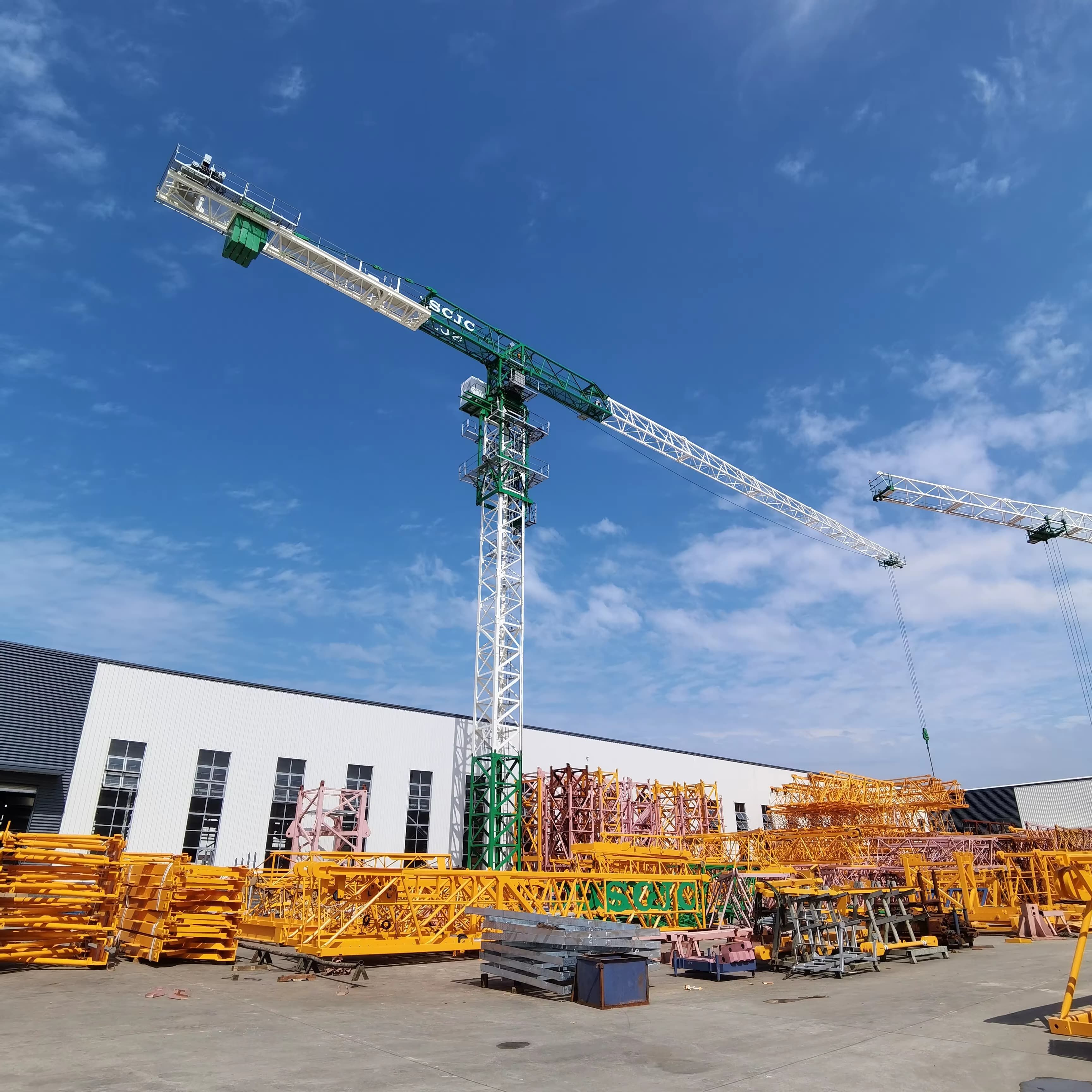
Total Cost of Ownership for Flat Top Tower Cranes
Initial purchase cost and capital investment for flat top tower cranes
Purchasing a flat top tower crane requires an upfront investment of $500,000–$2.5 million, depending on lifting capacity (1–20 tons) and jib length (40–100 meters). Financing typically involves 10–30% down payments with interest rates averaging 6–9% for commercial construction loans. Unlike modular rentals, ownership transfers full asset liability to contractors while enabling greater scheduling autonomy.
Hidden costs: Downtime, labor, and regulatory challenges
Unplanned mechanical failures cost $4,200–$8,500 daily in delayed workflows—industry studies show 14% of owned cranes experience at least 21 downtime days annually. Specialized operator training ($145–$210/hour) and permit revisions for zoning changes (averaging 45–90 processing days) further erode profitability in multi-year projects.
Rental Models and Financial Flexibility for Long-Term Projects
Understanding Long-Term Flat Top Tower Crane Rental Rates and Pricing Factors
Rental deals that last longer tend to save between 15 to 30 percent when compared with shorter term options. The actual savings depend on how long the project runs, what kind of equipment is needed, and what's happening in the market at the time. Looking at construction work in cities during 2024 showed something interesting about this trend. When people rent for over a year they usually get some sort of discount for bulk usage. But watch out for those summer months when demand jumps up around June through August. Rates during these peak seasons can actually go up as much as 18 percent higher than normal prices.
Cost Efficiency Based on Rental Duration and Project Phasing
Multi-phase projects achieve optimal savings through hybrid rental models—locking in base crane units for the full timeline while adding specialized attachments per phase. This approach reduced mobilization costs by 41% in a recent Los Angeles high-rise development compared to traditional short-term leasing.
Additional Fees: Delivery, Setup, Teardown, and Technical Support
Hidden costs in crane rentals average 22% of base contract values, with site-specific challenges significantly affecting final pricing:
Maintenance Coverage and Operational Uptime in Rental Agreements
Leading providers guarantee 98% operational availability through predictive maintenance programs, leveraging IoT sensors to reduce mechanical failures by 63% compared to traditional schedules. These packages cover all wear-and-tear repairs except those caused by operator error.
Trend: Growing Demand for Flexible Rental Solutions in Large-Scale Construction
The global shift toward design-build project delivery has increased demand for adaptable rental contracts by 140% since 2020, with 78% of contractors now prioritizing agreements that allow mid-project specification changes without penalty. This flexibility is especially valuable in projects exceeding $500 million where design iterations are frequent.
Project Duration and Utilization: When Buying Makes Economic Sense
Construction firms face a critical financial decision when committing to flat top tower crane ownership: determining the project duration and utilization rates that justify the investment. Industry analysis shows ownership becomes cost-effective when crane utilization exceeds 70% of operational hours across 24+ month projects.
Break-even analysis: Identifying the rent-vs-buy tipping point
A recent case study comparing rental and ownership models for high-rise developments found purchasing delivers ROI when projects exceed 32 months, with break-even points influenced by local labor costs ($58–$112/hour), energy consumption (15–22 kW/h), and regional tax incentives (up to 26% depreciation write-offs in Tier 1 cities).
High utilization thresholds that justify flat top tower crane ownership
Data from 142 infrastructure projects reveals ownership economics improve dramatically above 2,100 annual crane hours, with owned units achieving 18% lower per-lift costs versus rentals at this level. Projects requiring continuous double-shift operations (16+ hours/day) benefit most from ownership’s fixed cost structure.
Ownership ROI across overlapping urban construction projects
Firms managing parallel projects within 15-mile radii achieved 142% ROI improvements through crane-sharing between sites, leveraging ownership’s scheduling flexibility. A payback period analysis of $1.2M crane investments showed 3.8-year recoveries when servicing three or more staggered high-rise developments.
Frequently Asked Questions
What is the initial cost of purchasing a flat top tower crane?
The initial purchase cost ranges from $500,000 to $2.5 million, depending on factors like lifting capacity and jib length.
What are the common ongoing expenses associated with owning flat top tower cranes?
Ongoing expenses include maintenance, insurance, compliance costs, and storage fees. These can amount to 15-20% of the crane's initial value annually.
How does crane depreciation affect long-term costs?
Flat top tower cranes depreciate at 18–22% annually. After five years, residual values typically reach 40–60% of the original purchase cost.
Table of Contents
- Total Cost of Ownership for Flat Top Tower Cranes
-
Rental Models and Financial Flexibility for Long-Term Projects
- Understanding Long-Term Flat Top Tower Crane Rental Rates and Pricing Factors
- Cost Efficiency Based on Rental Duration and Project Phasing
- Additional Fees: Delivery, Setup, Teardown, and Technical Support
- Maintenance Coverage and Operational Uptime in Rental Agreements
- Trend: Growing Demand for Flexible Rental Solutions in Large-Scale Construction
- Project Duration and Utilization: When Buying Makes Economic Sense
- Frequently Asked Questions