 EN
EN

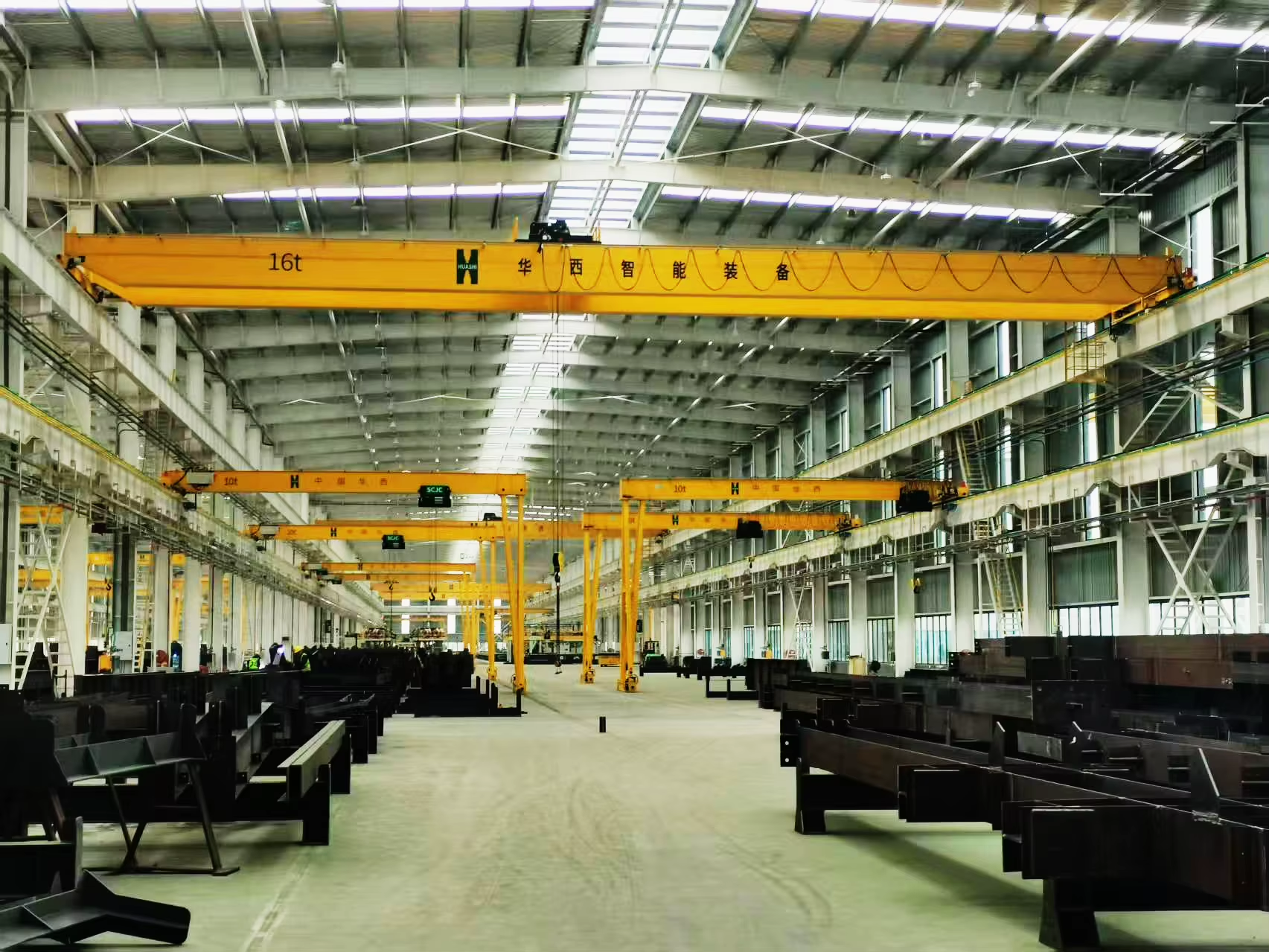
Precision in Segmental Bridge Assembly Using Bridge Gantry Cranes
The Rise of Segmental Bridge Construction with Bridge and Gantry Cranes
Modern bridge and gantry cranes have revolutionized segmental bridge construction, enabling the assembly of 2,500-ton structures with ±3 mm accuracy. According to a 2023 AEC Industry Report, 78% of bridge contractors now use prefabricated segments—up from 43% in 2016—thanks to advanced crane systems that reduce on-site labor by 60% compared to cast-in-place methods.
How Bridge Gantry Cranes Enable High-Precision Handling of Pre-Cast Segments
These cranes deliver exceptional control when handling 80-ton concrete segments through integrated laser guidance and load-cell monitoring, ensuring alignment within 0.5° of design specifications. Their rotational stability prevents stress fractures during lifts, while significantly improving speed and safety.
| Precision Factor | Manual Handling | Bridge & Gantry Crane |
|---|---|---|
| Positional Error Margin | ±25 mm | ±1.5 mm |
| Segment Placement Time | 45 minutes | 8 minutes |
| Worker Safety Rating | 72/100 | 97/100 |
Optimizing Workflow in Dense Urban Areas with Mobile Gantry Crane Systems
Collapsible mobile gantry cranes reduce workspace needs by 40% in tight urban environments. During a Tokyo metro expansion, such systems deployed in 28 minutes—versus 4 hours for fixed cranes—and operated within 6-meter corridors thanks to 360° rotational capability. By supporting three crews simultaneously, the approach cut total project duration by 19%.
Full-Span Bridge Launching Enabled by High-Capacity Gantry Cranes
Efficiency Improvements in Full-Span Erection Through Bridge Gantry Crane Deployment
According to last year's Bridge Construction Report, bridge and gantry cranes are cutting down on full span erection times by around 35 to 40 percent when compared with older techniques. These rail mounted systems really speed things up too they can get those big spans across distances ranging from 80 meters all the way up to 120 meters, sometimes even managing one or two such installations each week. And let's not forget about the improvements we've seen recently in counterweight designs either. The latest models out there now can actually handle incredibly heavy loads, with some capable of lifting as much as 900 tons worth of material during operations.
Integration of Real-Time Monitoring for Safety in Gantry Crane Operations
Embedded IoT sensors provide real-time data on stress concentrations (±2% accuracy), wind speed and direction (updated every 0.5 seconds), and hydraulic pressure across 38 checkpoints. Since 2020, this telemetry has contributed to a 62% reduction in mechanical failures during span launches, as reported by the Global Crane Safety Initiative.
Coordinating Multi-Crane Lifts for Accurate and Safe Span Placement
Advanced synchronization controllers allow clusters of 4–6 gantry cranes to function as a single lifting unit. In a 2024 pilot, millimeter-wave positioning achieved 1:250,000 precision, placing a 1,400-ton composite span with ±8 mm accuracy across all support points—setting a new standard for large-scale coordinated lifts.
Balanced Cantilever Construction Supported by Advanced Gantry Crane Systems
Engineering Challenges in Balanced Cantilever Bridge Projects
Getting balanced cantilever construction right requires extreme precision at the millimeter level when positioning those massive segments that can weigh as much as 750 tons on each side of the pier. Things get complicated fast because of uneven weight distribution, tricky shapes, and all sorts of environmental issues including strong winds that throw everything off balance. According to research published by the International Bridge Consortium last year, nearly seven out of ten project delays happen because the lifting gear isn't properly synced during these operations. That kind of coordination problem really slows things down and increases costs for everyone involved.
Synchronized Lifting with High-Capacity Bridge and Gantry Cranes
Closed-loop hydraulic controls enable precise, synchronized movement across multiple hoists, maintaining equilibrium even during asymmetric lifts. Real-time strain gauges monitor deflection, reducing rework by 40% compared to conventional methods based on industry efficiency benchmarks.
Case Study: Mountainous Terrain Bridge Built Using Mobile Gantry Cranes
For a viaduct in the Himalayas, rubber-tired gantry cranes (RTGs) with adaptive steering transported 600-ton segments across rugged terrain while maintaining ±5 mm positioning accuracy. This mobility-driven strategy reduced installation time by 32% compared to static crane setups.
Static vs. Traveling Gantry Systems: Evaluating Best Fit for Cantilever Builds
| Feature | Static Gantry Systems | Traveling Gantry Systems |
|---|---|---|
| Mobility | Fixed foundation | Rail-mounted or RTG mobility |
| Load Capacity | 1,000+ tons | 500–800 tons |
| Deployment Time | 2–3 weeks | <72 hours |
| Ideal Use Case | Long-term projects >18 months | Sites requiring frequent repositioning |
While static systems suit high-load, stable environments, traveling variants offer agility for dynamic sites. Hybrid configurations now support operations on slopes up to 30° without sacrificing precision.
Gantry Cranes in Modular and Precast Infrastructure Construction
Growth of Offsite Fabrication in Modern Bridge and Rail Projects
Offsite fabrication is transforming infrastructure delivery by improving quality control and reducing weather-related delays. NBM&CW's 2023 report indicates bridge construction timelines shorten by 30–50% when using precast elements assembled in controlled environments. This method also reduces on-site labor while ensuring consistency across rail viaducts and modular bridges.
Handling Heavy Precast Elements Efficiently with Bridge Gantry Cranes
Bridge and gantry cranes move precast segments weighing up to 500 tons with millimeter-level accuracy. Their cantilevered designs allow placement of 40-meter beams between columns without disrupting adjacent work zones. Rubber-tired models streamline logistics by transporting components directly from casting yards to installation points.
Case Study: High-Speed Rail Viaduct Using Modular Components and Gantry Cranes
A 12-km high-speed rail viaduct used synchronized twin-gantry systems to position 3.2m × 12m precast segments at a rate of 8 units per hour. With automated pathfinding eliminating manual surveying, the project achieved 99.8% alignment accuracy across 4,200 segments.
Integrating BIM Planning with Gantry Crane Execution for Precision Builds
Building Information Modeling (BIM) platforms now simulate crane kinematics to plan material handling sequences before construction begins. This integration reduced collision risks by 67% in complex rail yard installations, according to ASCE's 2024 findings, ensuring seamless coordination between gantry operations and prefabrication schedules.
Material Handling and Site Logistics Optimization with Gantry Cranes
Addressing Daily Logistics Challenges on Large Construction Sites
Bridge and gantry cranes resolve common site bottlenecks such as congested storage and workflow interruptions due to delivery delays. By moving heavy components—steel beams, precast segments, machinery—directly to point-of-use, they reduce manual handling by up to 75% compared to forklift-based workflows, based on the 2023 Industrial Construction Report.
Maximizing Load Capacity and Coverage with Outdoor Gantry Crane Solutions
Outdoor gantry cranes built with corrosion-resistant steel and weatherproofed controls handle loads over 250 tons, ideal for staging near waterways or open yards. Their modular runways can extend 40–60 meters, offering extensive horizontal reach across sprawling sites.
Deploying Single-Girder Gantry Cranes for Frequent, Lightweight Material Moves
For repetitive tasks like transporting rebar bundles or formwork panels, single-girder gantry cranes offer agility and efficiency. Their lightweight trolleys reduce cycle times by 20–35% for loads under 20 tons, making them ideal for high-frequency operations.
Adapting Gantry Cranes to Diverse Environments: Indoor vs. Outdoor Use Cases
When it comes to gantry systems, manufacturers really adapt them based on where they'll be used. For outside installations, there's extra reinforcement against strong winds plus electrical parts that can handle UV exposure without breaking down. Inside facilities, the focus shifts to smaller space requirements, motors that won't create sparks, and sensors that stop collisions before they happen. Looking at real world data from 2022, factories that switched to these adaptable gantry setups saw their material handling problems drop by almost half compared to places still using just mobile cranes for everything. That kind of improvement makes a big difference in day to day operations.
FAQ
What role do gantry cranes play in modern bridge construction?
Gantry cranes are pivotal in modern bridge construction as they handle the precision assembly of prefabricated segments and assist in large-scale projects like viaducts, urban bridges, and full-span erections with high capacity and efficiency.
What are the advantages of using prefabricated bridge segments?
Prefabricated bridge segments offer enhanced quality control, faster assembly times, reduced labor costs, and consistency, especially when combined with advanced crane systems for seamless installation.
How do gantry cranes improve safety during construction?
Gantry cranes improve safety through advanced control systems, such as closed-loop hydraulics, real-time monitoring with IoT sensors, and synchronization, minimizing manual handling and operational risks.
Are gantry cranes suitable for all environments?
Yes, gantry cranes can adapt to both indoor and outdoor environments, with specialized designs for each. They offer reinforcement against environmental challenges like wind and tailored systems for efficient indoor use, thus addressing diverse construction needs.
Table of Contents
- Precision in Segmental Bridge Assembly Using Bridge Gantry Cranes
- Full-Span Bridge Launching Enabled by High-Capacity Gantry Cranes
- Balanced Cantilever Construction Supported by Advanced Gantry Crane Systems
- Engineering Challenges in Balanced Cantilever Bridge Projects
- Synchronized Lifting with High-Capacity Bridge and Gantry Cranes
- Case Study: Mountainous Terrain Bridge Built Using Mobile Gantry Cranes
- Static vs. Traveling Gantry Systems: Evaluating Best Fit for Cantilever Builds
- Gantry Cranes in Modular and Precast Infrastructure Construction
- Material Handling and Site Logistics Optimization with Gantry Cranes
- FAQ