 EN
EN

Understanding Construction Elevator Load Requirements and Limitations
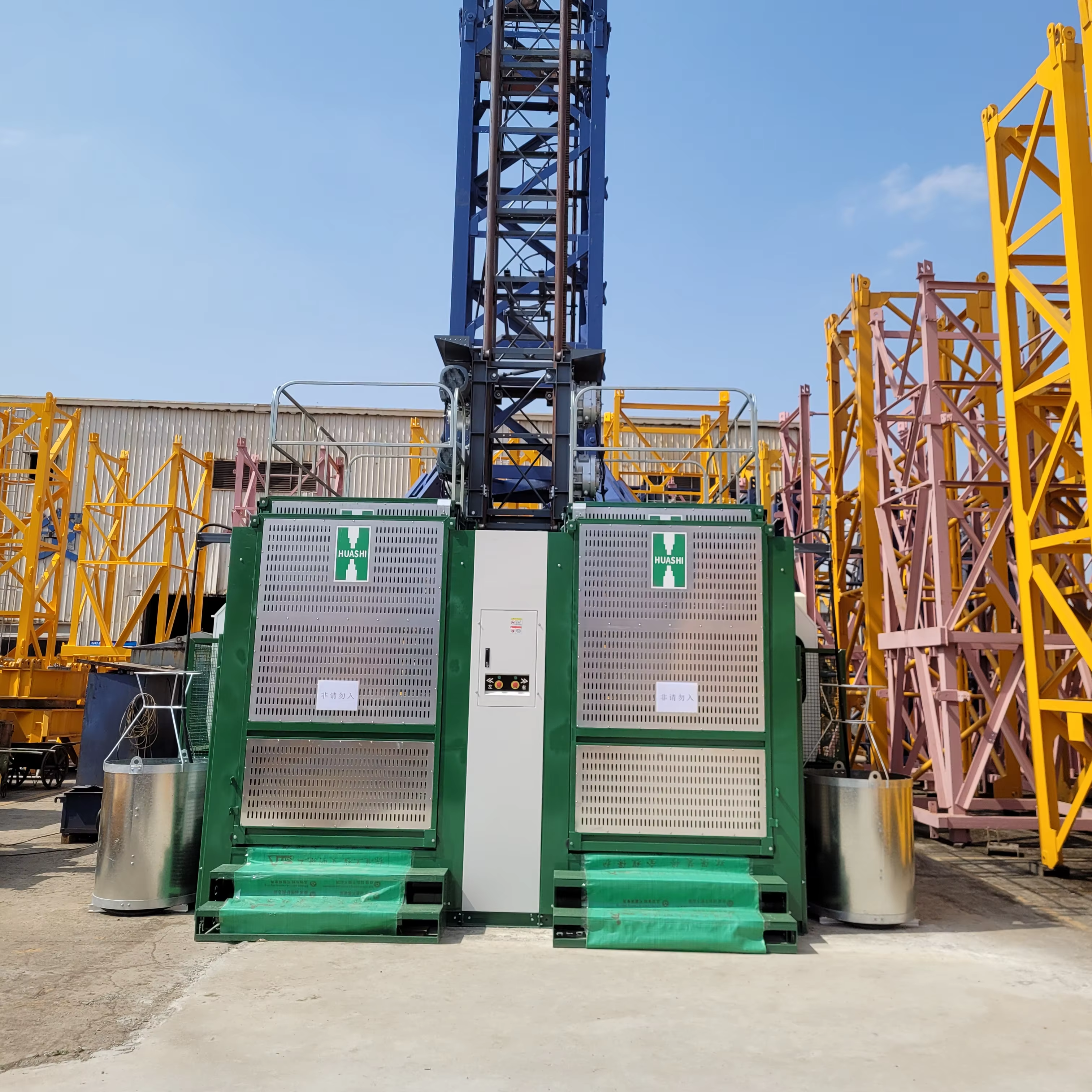
Distinguishing Material Hoists from Passenger Elevators
Material hoists get built specifically for moving gear and supplies vertically, not people. They're pretty different from regular elevators when looking at how they're made, what they're meant for, and their safety features. Passenger elevators come packed with extra safety stuff like emergency brakes, door locks, and climate controls to keep folks safe inside. Material hoists focus on things like open platforms for loading, strong frames that can handle weight, and being durable enough for heavy loads. According to OSHA rule 1926.552, workers shouldn't ride these hoists unless there's proper fall protection installed per ANSI A10.4-2022 guidelines. People still try to use them for carrying staff sometimes, which leads to lots of accidents on construction sites. Looking at OSHA's accident reports shows workers who misuse material hoists face about 67% greater chance of getting seriously hurt compared to those following the rules.
Respecting Rated Load Capacity and Dynamic Load Factors
Exceeding a hoist's rated load capacity—even marginally—introduces critical failure risks due to dynamic forces generated during acceleration, deceleration, and directional changes. Engineers determine safe working limits by evaluating three interrelated components:
- Static Load: The nominal weight of materials being lifted
- Dynamic Forces: Momentum-induced stresses, typically modeled at 1.5 static load per ASME B30.2 and OSHA guidance
- Environmental Stressors: Wind loading, platform sway, or seismic considerations in exposed or high-rise applications
Take a standard 5,000 lb hoist for instance. When lifting heavy materials like bricks or concrete blocks that don't absorb shock well, the actual safe working load drops down to around 3,300 lbs after factoring in those dynamic forces and built-in safety buffers. Safety regulations require checking both the total weight being lifted and how balanced it is before starting any operation. Failing to comply can result in fines over $15k for every single violation. On busy construction sites where equipment gets used constantly throughout the day, workers need to calibrate their load monitoring sensors at the start of each shift. And not just once in a while either; these devices should be tested regularly using known reference weights to maintain accuracy across all operations.
Proper Load Securing Techniques for Construction Elevator Use
Effectively securing loads prevents shifting, tipping, or ejection during vertical transit—directly protecting workers below and preserving material integrity. These protocols reflect field-tested best practices aligned with ANSI/ASSE A10.22—2022 and OSHA's scaffold and hoist enforcement criteria.
Blocking, Bracing, and Immobilizing Loads Against Shift or Tipping
When dealing with irregular loads like rebar bundles, conduit racks, or HVAC ducts, proper immobilization is essential. The best approach usually involves timber blocks, steel supports, or adjustable frames securely attached to the hoist platform itself. For standard palletized cargo, pairing friction mats that meet ASTM D1894 standards with perimeter barriers becomes critical. These barriers need to handle at least one and a half times whatever force might occur during sudden stops. Most industry experts agree with what's outlined in ANSI A10.22 guidelines, which basically say there should be no more than about two centimeters of space between any load edge and the restraint surface around all four sides. Recent studies from the International Journal of Industrial Ergonomics back this up too. Their tests showed that when loads are fully braced against all movement, they shift sideways much less—around 89% reduction in test scenarios simulating emergency braking situations.
Center of Gravity Alignment and Load Balance Verification
Stability begins with precise center-of-gravity (CoG) alignment: the load's CoG must sit vertically over the hoist platform's geometric centerline. Verify balance using this validated sequence:
- Measure individual component weights and distances from reference points; calculate composite CoG using moment summation
- Mark CoG location visibly on oversized or asymmetrical items (e.g., generators, prefabricated wall panels)
- Conduct a controlled lift test to ±15 cm height to observe platform tilt, cable tension symmetry, and load settling behavior
Misaligned CoG is implicated in 70% of tipping incidents logged in OSHA's Construction Fatality Inspection Database. When handling asymmetric loads—such as cranes or modular units—apply counterbalancing ballast secured directly to the platform frame using certified anchor points, not temporary tie-downs.
Selecting and Inspecting Restraint Systems for Vertical Transport
Matching Tie-Downs, Slings, and Chains to Load Type and Weight Ratings
Selecting appropriate restraints demands rigorous alignment with both load characteristics and regulatory performance thresholds. The Working Load Limit (WLL)—not ultimate breaking strength—is the governing benchmark for all rigging components. Key selection criteria include:
- Material compatibility: Wire rope slings excel in high-heat or abrasive environments but may mar sensitive finishes; synthetic web slings preserve surfaces but degrade rapidly under UV exposure or chemical contact
- Load profile: Chains provide superior abrasion resistance for heavy, irregular, or sharp-edged cargo exceeding 5 tons—but add dead weight that affects net payload capacity
- Dynamic amplification: Per ASME B30.9—2023, apply a minimum 1.5 multiplier to static weight when determining required WLL for vertical lifts involving acceleration or variable speed control
When looking at manufacturer certifications, don't forget to check them against real-world measurements including the load's size, center of gravity position, and how the slings are angled. Standard pallets usually need four points of attachment using synthetic or polyester straps that can handle at least 2500 pounds each. Things get trickier with irregular shapes or valuable cargo though. Glass panels for building facades and delicate machinery require special securing methods. These typically involve combinations of chain anchors, fabric slings, and padding between the load and the carrier. This setup prevents unwanted movement and protects against damage from uneven weight distribution across the transport surface.
Pre-Use Inspection Protocols for Lashings and Anchorage Points
Keep track of inspections with either digital or paper checklists that meet OSHA 1926.251 standards. Any parts showing signs of permanent bending, cracks under stress, or reduced flexibility should be taken out of service immediately, even if they look okay at first glance. The National Safety Council released their 2023 report on vertical transport incidents last month, and it found something alarming: over two-thirds of avoidable equipment failures came from problems with lashings that weren't spotted during regular maintenance rounds. To make sure everything stays safe, companies need to bring in certified outside experts every three months to run tension tests on how systems perform when lifted and moved around as they would be in real operations. These tests cover all the different ways equipment might be used day to day.
FAQ
Can workers ride material hoists?
Workers shouldn't ride material hoists without proper fall protection installed per ANSI A10.4-2022 guidelines.
What happens if you exceed a hoist's load capacity?
Exceeding the rated load capacity can introduce critical failure risks due to dynamic forces during operation.
How often should load monitoring sensors be tested?
Load monitoring sensors should be regularly tested and calibrated using known reference weights at the start of each shift.