 EN
EN

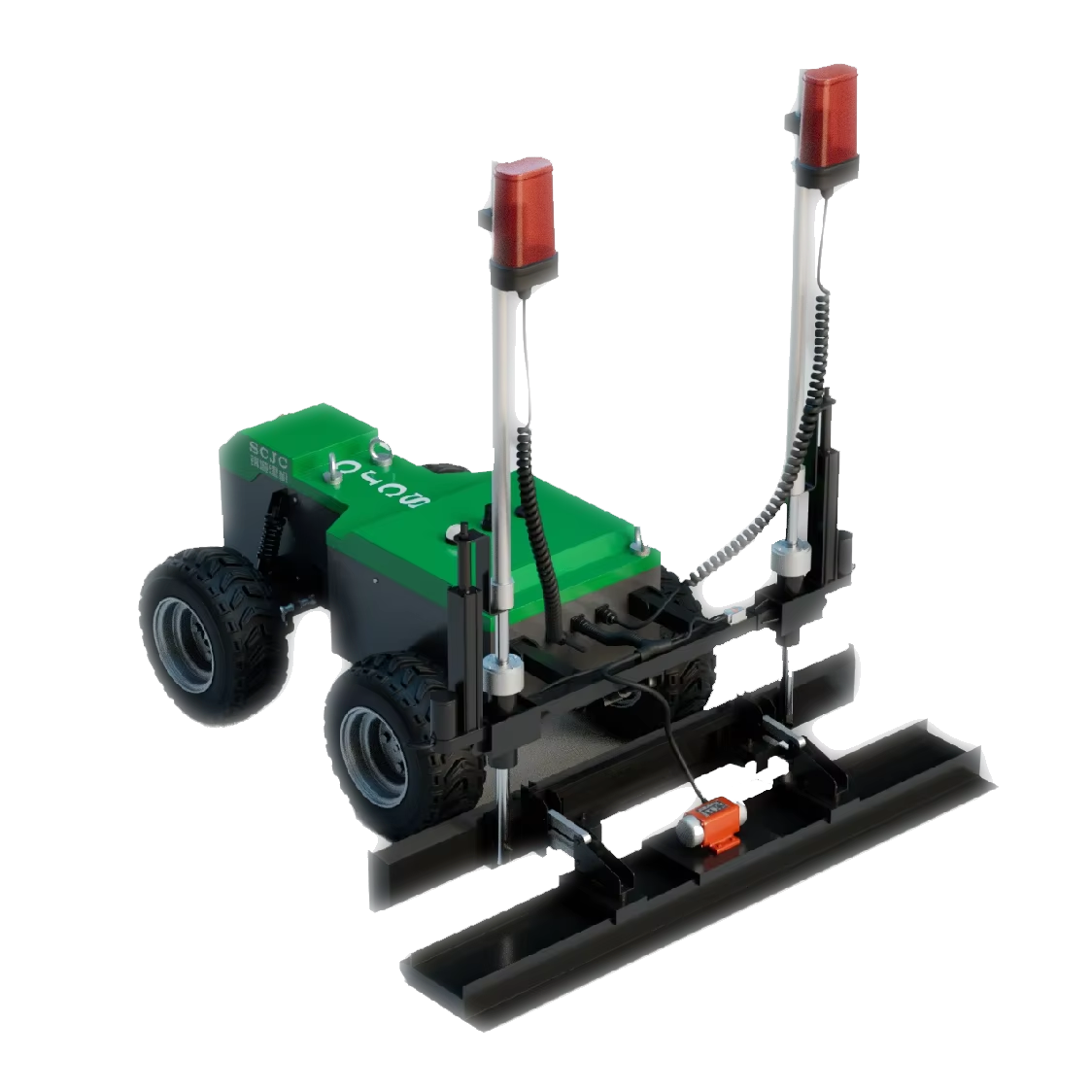
What Concrete Paving Robots Are and How They Work
Core Technology: Autonomous Guidance, Laser Profiling, and Real-Time Slab Control
Today's concrete paving robots combine three key technologies that are changing how roads get built: autonomous navigation, laser scanning, and smart control systems for slabs. With GPS combined with inertial navigation tech, these machines can follow paths within just a few centimeters - no more problems with human drivers making steering errors. At the same time, fast laser scanners constantly check what's underneath the road surface, picking up even tiny changes in height down to about 1 millimeter. All this information goes into control systems that make real time adjustments to things like the screed height, how much material gets laid down, and the pressure during extrusion. What we see as a result is much more uniform slabs with better geometry across their surfaces. Tests show these new methods cut down on surface bumps and dips by around 37% when compared to old school techniques. Field tests using tools like the Falling Weight Deflectometer and International Roughness Index back up these improvements in road quality.
Key Systems in Operation: Epiroc DynaRoad and Brokk RoboPave Platforms
Take a look at what's happening in the field with machines like Epiroc's DynaRoad and Brokk's RoboPave systems. These aren't just theoretical concepts anymore but actual working solutions changing how roads get built. Both machines come equipped with artificial intelligence that lets them move around on their own, figuring out paths through construction sites without needing someone to steer them constantly. The DynaRoad really shines when laying down asphalt on major highways at speed. It uses special radar technology to keep those joints between sections perfectly aligned even when pouring continuously for hours. Meanwhile, the RoboPave handles trickier situations found in city centers where space is tight. Think busy intersections or areas where pedestrians walk alongside road work. Traditional machinery simply can't navigate these spots well enough to maintain quality standards. When used together, these automated systems can run nonstop day after day, which means contractors report getting about 40% more done compared to regular crews. Plus, the finished surfaces tend to be smoother and require fewer workers standing in hazardous conditions all day long.
Concrete Paving Robots and Road Quality Improvement
Reducing Surface Irregularities by 37%: FWD and IRI Validation Data
The real advantage of robotic paving comes from its laser guided leveling system combined with constant sensor monitoring, not just because it's automated. When looking at field tests across several US states' transportation departments, there was about a 37% drop in those annoying surface bumps compared to traditional and semi-automated approaches. These results were confirmed using standard FWD and IRI testing methods that everyone in the industry recognizes. According to a recent 2023 FHWA report on road surfaces, roads paved with robots kept their IRI scores under 2.0 meters per kilometer for the first five years they were open to traffic. That puts them solidly in the excellent category while most regular paved roads typically score between 2.8 and 3.2 m/km according to industry standards. The technology gets even better when we look at the integrated sensors that monitor concrete slump and consistency during pouring. These allow workers to adjust the mix on the fly, which stops problems like air pockets and honeycomb formations that cause roads to break down much sooner than expected.
Consistent Slab Thickness and Joint Alignment via Closed-Loop Feedback
The closed loop feedback system keeps slab thickness pretty consistent throughout projects, staying within plus or minus 3 millimeters overall something manual methods just cant match. These systems work alongside GPS synced extrusion equipment that adjusts how much concrete flows out depending on what the lasers see beneath the surface. At the same time, little temperature sensors are built right into the mix so we know exactly when it's time to cut those joints properly. Getting this level of accuracy really helps prevent problems down the road. Two big issues get avoided this way faulting between sections which accounts for about a quarter of all road damage according to that recent ASCE report from 2024, and those nasty thermal blowouts that happen when expansion joints aren't lined up correctly. Plus there's AI doing visual checks as things happen, making sure everything stays aligned within a single millimeter. This cuts down on stress points where cracks tend to form faster after vehicles keep passing over them again and again.
Cost and Timeline Optimization for Municipal Concrete Paving Projects
Cities are starting to see real money savings and better results when they switch to robotic paving systems. The labor bill drops somewhere between 30 and 40 percent because one person can now handle what used to take four different workers on site each day. Material waste goes way down too around 15 to maybe 20 percent thanks to machines that measure exactly how much concrete goes where and line up joints automatically. That matters a lot since making cement creates about 8% of all carbon dioxide emissions worldwide. Road projects get finished faster these days, sometimes cutting time by almost half. No more waiting for crews to hand off work at shift changes, plus machines keep working through bad weather at night, so roads open sooner and there's less hassle managing traffic during construction. These paved surfaces last longer too, often reaching 25 to 30 years before needing replacement, with maintenance needed only every other year instead of annually. For cash-strapped municipalities, there are now options like robotics as a service that let them rent equipment rather than buy it outright. This fits well with federal funding programs such as RAISE and INFRA under the recent infrastructure law, making it easier for towns and cities to upgrade their roadwork capabilities without huge upfront costs.
FAQ
What is the primary advantage of using concrete paving robots?
The primary advantage is the improved quality of road surfaces through precise laser-guided leveling, reducing surface irregularities by around 37% compared to traditional methods.
How do these robots improve road quality?
They consistently maintain better slab geometry, minimize surface bumps through real-time adjustments, and ensure alignment through automated systems, enhancing the longevity and smoothness of roads.
Are there financial benefits to using these paving robots?
Yes, switching to robotic paving systems can reduce labor costs by 30-40%, minimize material waste by 15-20%, and shorten project timelines significantly.