 EN
EN

Assessing Project-Specific Concrete Paving Requirements
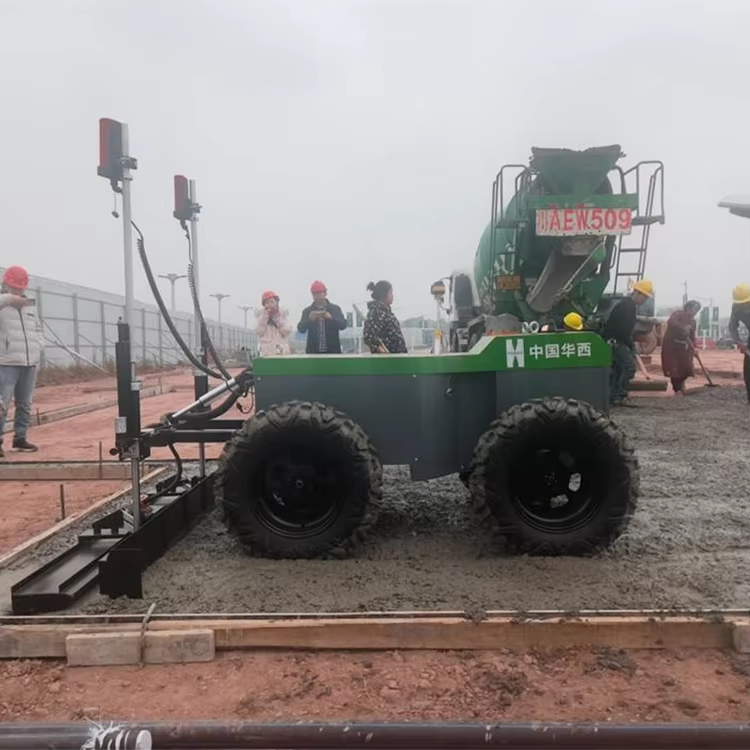
Slab Scale, Complexity, and Finish Tolerances Drive Robot Selection
The size of the project really determines whether robotic pavers make sense. For those huge warehouse floors that need continuous coverage without stopping, we typically recommend full-size systems capable of running all day long. But when dealing with detailed architectural work like decorative concrete slabs, smaller units with better maneuverability become essential. Getting the finish right matters a lot in industrial settings. That's why serious jobs usually need machines with laser guidance for screeding and fine-tuned vibration controls. Most budget models can't handle the strict ±2mm flatness requirements that many specs demand. And let's not forget about tricky details either. Embedded electrical lines or those fancy curved edges? They absolutely require sophisticated path planning software to avoid mistakes. Before picking any equipment, it pays to match what the robot can do against exactly what the job demands on site.
LOAM vs. LOAC: How Classification Impacts Rebar Handling, Manual Handoff, and Flatness Compliance
LOAM machines use ground penetrating radar to spot rebar obstacles and automatically stop pouring when needed, allowing concrete to flow continuously over entire rebar grids without interruption. On the other hand, LOAC systems don't have this feature built in and need workers to manually handle the rebar transitions at specific points along the process. This creates gaps where things can go wrong and adds variability to the outcome. The difference is pretty significant too. LOAM typically meets flatness requirements within about 1.5 mm tolerance. But because LOAC depends so much on people making those transitions work, there's a higher chance of problems like inconsistent slump, cold joints forming, and needing repairs later on. These issues become especially expensive problems in tilt-up construction projects aiming for FF/FL ratings above 50.
Evaluating ROI and Operational Readiness for Concrete Paving Automation
Realistic ROI Timelines: Why 68% of Mid-Size Contractors Achieve Payback Only With Pre-Integration Workflow Alignment
Getting a good return on investment from automated concrete paving really depends on getting workflows right before bringing in the machines. According to industry reports, around two thirds of mid sized contractors get their money back within just over a year, but this happens mostly when they start integrating robots into their normal construction processes right at the beginning stage. Contractors who handle things like checking grades digitally, planning pours ahead of time, and setting up proper curing procedures before automation kicks in tend to speed up operations by about 40%. What makes all the difference? Making sure those old school tasks still need to happen fit smoothly with what the robots do. Take something simple like putting down rebar while the robot finishes the surface. If these steps don't line up properly, workers end up stopping and starting constantly to recalibrate everything, which breaks up the flow and creates gaps in the finished slabs.
Critical Integration Checks: Power Infrastructure, GNSS Signal Reliability, and Crew Digital Proficiency
Three non-negotiable pillars determine automation viability:
- Continuous Power: High-torque paving robots require stable 480V three-phase power with <3% voltage fluctuation to prevent slump variability during pours. Backup generators must deliver 100% of peak load capacity.
- Sub-2cm GNSS Precision: Sustainable operation demands dual-frequency receivers with unobstructed sky visibility. Urban projects using RTK networks report 99% fewer corrective interventions when baseline stations are located within 1 km of the site.
- Crew Tech Fluency: Teams already using digital layout tools adapt 2.1× faster to robotic workflows. Training on tablet-based interfaces for real-time monitoring of concrete temperature and slump consistency reduces manual oversight by 70%.
Comparing Core Concrete Paving Robot Types by Function and Limitation
Layout & Marking Robots: Sub-3mm Precision for Control Joints and Embeds in Precast-Ready Slabs
The systems provide around 3mm accuracy when it comes to placing control joints and setting embed positions, something really important for precast ready slabs. When things get misaligned, panels just won't fit properly and dowels might fail altogether. With their ability to repeat measurements down to the millimeter, these tools basically eliminate problems with chalk lines drifting off course and all those mistakes people make when measuring manually. This cuts down on layout work by roughly two thirds in most cases. Contractors find them particularly useful for industrial floor projects that need at least FF50 FL40 flatness standards or deal with complicated geometric designs. The thing is, when tolerances start adding up across multiple components, even small errors become big money losers during construction.
Pouring/Casting Robots: Volumetric Delivery with Real-Time Slump Monitoring for Fiber-Reinforced or Low-Water-Content Concrete Paving
Concrete pouring robots work together to deliver just the right amount of material while constantly checking the slump through sensors. This matters a lot when dealing with those tricky mixes that have low slump, contain fibers, or set really quickly. These machines adjust how fast the concrete flows as needed, making sure everything gets packed evenly and preventing those annoying cold joints that show up in big pours. The level of control these systems offer becomes especially important during harsh weather conditions or when deadlines are pressing. Human operators just can't match this consistency, and their mistakes often lead to problems later on. Fixing issues after the fact typically adds between 15% to 25% extra cost for surface repairs, which nobody wants to deal with.
FAQ Section
What type of project benefits most from using robotic concrete pavers?
Larger industrial projects, such as warehouse floors requiring continuous paving, benefit most from robotic pavers. Smaller, detailed architectural projects may require compact units for better maneuverability.
Why is LOAM preferable to LOAC machines?
LOAM machines use ground penetrating radar to identify rebar, allowing for continuous pouring without manual transitions and achieving better flatness compliance, which LOAC machines lack.
How do contractors ensure a good ROI with concrete paving automation?
Contractors can achieve a good ROI by aligning their workflows with automation from the start, including digitizing grade checks and planning in advance, resulting in smoother operations.