 EN
EN

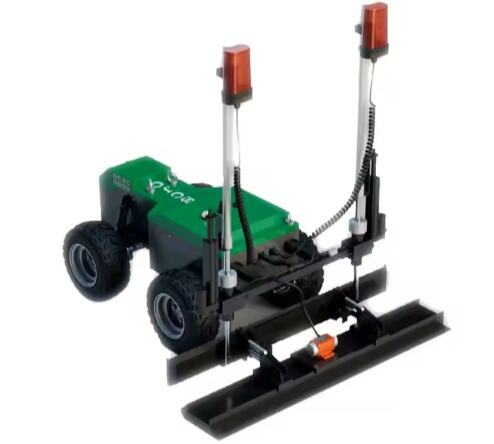
Concrete Paving Robots: Core Infrastructure Automation for Smart Cities
Addressing severe labor shortages and rising project complexity, autonomous concrete paving robots deploy advanced sensor fusion to deliver infrastructure with unprecedented precision. These systems eliminate manual grade-checking and stringline setups by integrating GNSS positioning, LiDAR terrain mapping, and inertial measurement units—maintaining sub-centimeter accuracy across uneven sites while reducing operator fatigue. By automating repetitive tasks like concrete spreading and finishing, contractors report 35–40% labor reduction per lane-mile, reallocating crews to higher-value supervision and quality assurance roles. Crucially, this automation syncs with existing Building Information Modeling (BIM) workflows, where digital design data directly guides robotic paths, ensuring dimensional compliance with project specifications. The operational continuity provided by these machines—operating in harsh weather or overnight shifts with consistent output—accelerates pavement installation timelines by 25% on typical municipal projects. That’s critical for cities scaling bike lanes, sidewalk networks, and micro-mobility corridors where rapid deployment supports broader sustainability targets.
Precision and Resilience: How Robotic Concrete Paving Meets Urban Climate and Density Demands
Sub-5mm Tolerance in Dynamic Environments via GNSS/LiDAR/IMU Sensor Fusion
Robotic concrete paving achieves sub-5mm accuracy in congested urban settings through multi-sensor fusion. GNSS provides macro-scale guidance; LiDAR scans detect real-time obstacles such as buried utilities or construction debris; and IMUs compensate for machine vibration and terrain shifts. This integration maintains continuous millimeter-level precision—even when satellite signals are disrupted by high-rise structures—enabling reliable installation of IoT-ready infrastructure. Field tests show 99.3% consistency in joint alignment versus 92% with manual methods, reducing rework by 37% (Smart Infrastructure Journal 2023).
Climate-Resilient Deployment: Accelerated Curing Integration and Adaptive Joint Placement
To counter urban heat islands and freeze-thaw cycles, robotic systems embed climate adaptations directly into workflows. Heated screeds accelerate curing during subzero operations, cutting setting time by 53% in winter conditions. AI algorithms adjust joint spacing in real time using thermal sensor feedback to prevent cracking. In flood-prone zones, robots automatically widen joints by 15–20% to accommodate expansion during extreme rainfall. This dual approach enables year-round concrete paving with 40% fewer weather delays compared to traditional methods.
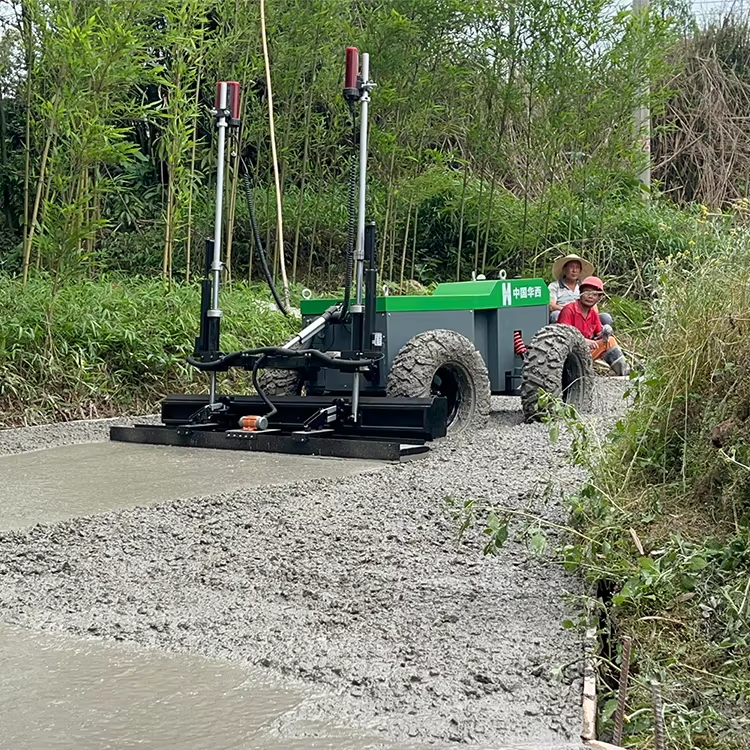
Seamless BIM-to-Robot Workflow: Digital Twins and Real-Time QA in Concrete Paving
Live Digital Twin Synchronization with Robotic Paving Progress and Material Telemetry
Robotic concrete paving systems integrate directly with Building Information Modeling (BIM) data, creating dynamic digital twins that update every 15–30 seconds. As robotic pavers lay concrete, IoT sensors embedded in the machinery capture real-time material viscosity and slump flow, GNSS positioning within 3mm accuracy, and ambient temperature and humidity. This synchronization allows project managers to detect deviations from planned tolerances before concrete sets. Industry studies demonstrate that live BIM-to-field workflows reduce geometric conflicts by 67% and cut RFIs (Requests for Information) by half. Material telemetry further enables immediate adjustments to water-cement ratios, vibration frequency based on slump consistency, and paver speed relative to environmental curing conditions.
Automated Flatness Validation and Closed-Loop Rework Triggers
Following material placement, robotic laser scanners mounted on boom arms conduct millimeter-grade flatness checks at 30-second intervals. By comparing as-built surfaces against BIM specifications, the system generates real-time F-number maps, flags areas exceeding ±5mm tolerance thresholds, and automatically triggers rework protocols on connected equipment. Integrated LiDAR validation eliminates manual string-line testing, reducing QA time by 80% while achieving 99.7% specification compliance. When inconsistencies are detected, the workflow initiates closed-loop corrections—directing robotic grinding units to precise coordinates. This prevents costly tear-outs by resolving defects within the critical 45-minute curing window. Projects leveraging these automated QA cycles report 40% fewer callback repairs than those using traditional manual methods.
Proven Impact: Scalable Deployment and ROI in Global Smart City Projects
Robotic concrete paving delivers measurable ROI through accelerated project timelines and reduced labor costs. Scalable deployment models enable cities to achieve higher-margin infrastructure expansion, as fixed operational costs don’t proportionally increase with project volume. Global case studies validate this efficiency:
Singapore Jurong Innovation District: 37% Faster Sidewalk Installation with IoT-Ready Joints
Precision robotic placement of sensor-embedded joints eliminated manual adjustments, compressing installation schedules by over one-third. This acceleration enabled simultaneous IoT conduit integration, future-proofing connectivity infrastructure without additional retrofitting costs.
Helsinki’s Winter-Adapted Fleet: Year-Round Concrete Paving Despite Subzero Temperatures
Thermal-regulated material delivery systems and rapid-curing admixtures maintained continuous operations at −15°C. Fleet automation reduced weather-related delays by 92% compared to traditional methods, demonstrating climate-resilient economic viability for northern smart cities.
FAQs on Concrete Paving Robots and Infrastructure Automation
What are the key benefits of using concrete paving robots?
Concrete paving robots significantly reduce labor costs, improve project timelines, enhance quality assurance, and adapt to various climate conditions. They also integrate seamlessly with BIM workflows, providing real-time data and automation capabilities.
How accurate are these robotic systems?
Robotic concrete paving systems achieve sub-5mm accuracy in dynamic urban environments by utilizing advanced GNSS, LiDAR, and IMU sensor fusion.
What makes these robots climate-resilient?
These robots feature adaptations like heated screeds for winter operations and thermal sensors for real-time adjustments, allowing year-round paving in challenging weather conditions.
How do these systems integrate with BIM workflows?
Concrete paving robots synchronize with BIM data to create live digital twins, allowing project managers to detect deviations and make adjustments in real time, significantly enhancing project efficiency.
Are robotic paving systems scalable for larger smart city projects?
Yes, robotic paving systems offer scalable deployment models. Operational costs remain low as project volume increases, delivering measurable ROI for cities expanding their infrastructure.
Table of Contents
- Concrete Paving Robots: Core Infrastructure Automation for Smart Cities
- Precision and Resilience: How Robotic Concrete Paving Meets Urban Climate and Density Demands
- Seamless BIM-to-Robot Workflow: Digital Twins and Real-Time QA in Concrete Paving
- Proven Impact: Scalable Deployment and ROI in Global Smart City Projects
- FAQs on Concrete Paving Robots and Infrastructure Automation