 EN
EN

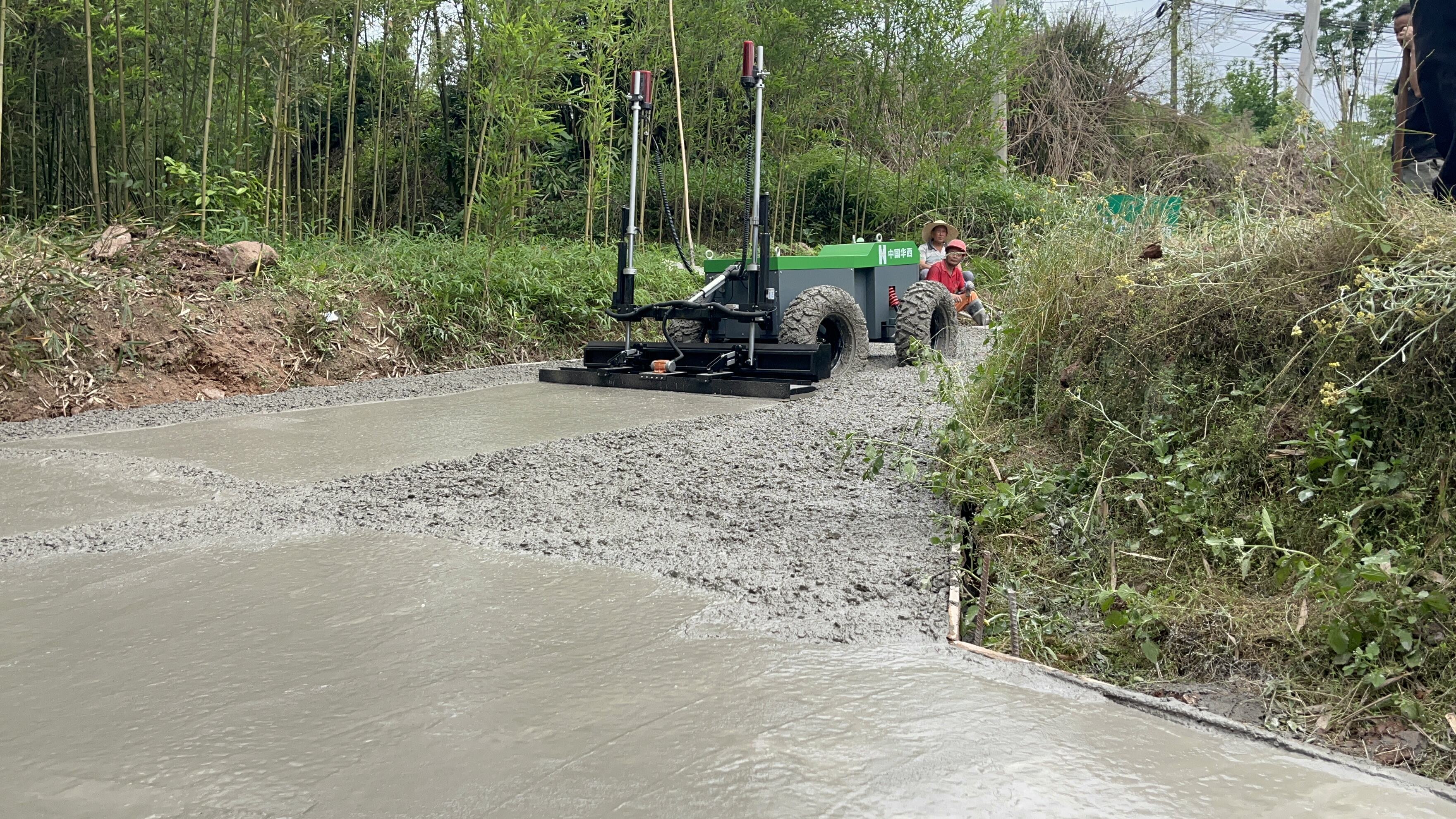
Fundamental Technology Differences: Slipform Concrete Paving Robots vs. Asphalt Paving Machines
How concrete paving robots achieve stringless, GPS- and 3D-model-guided precision placement
Modern concrete paving robots eliminate traditional stringlines through integrated positioning systems. GPS and robotic total stations continuously track paver location within 2mm accuracy, while 3D terrain models guide extrusion molds. Inertial measurement units (IMUs) detect minute elevation deviations, enabling automatic hydraulic adjustments during operation. This sensor fusion allows real-time corrections for sub-centimeter precision across large-scale projects—achieving the ±3mm slab thickness tolerance required for highways and airport runways. The technology reduces manual layout labor by 40% and maintains accuracy regardless of visibility conditions, operating effectively in low-light or dusty environments where traditional surveying fails.
Why asphalt pavers prioritize thermal consistency, vibratory compaction, and real-time grade feedback
Asphalt paving success hinges on material science fundamentals. Thermal consistency is paramount—material must remain between 135–163°C (275–325°F) to prevent premature cooling that causes segregation and weak joints. Modern machines feature insulated hoppers and heated screeds to maintain optimal temperatures. Simultaneously, dual-frequency vibratory systems achieve 92–98% density compaction before roller application. Real-time grade control using sonic sensors and automatic slope matching ensures uniform thickness, reducing surface deviations to under 1.6mm per 3m length. Without these integrated systems, asphalt would develop premature cracking and rutting—issues that increase lifecycle maintenance costs by 35%, according to pavement management studies cited by the Federal Highway Administration.
Automation Depth and Intelligence: AI, IoT, and Real-Time Control in Concrete Paving
Robotic total stations and integrated laser profilers enabling sub-centimeter concrete paving accuracy
Robotic total stations and integrated laser profilers form the backbone of modern slipform concrete paving automation. These systems replace stringlines entirely, using GPS and 3D model guidance to position concrete within millimeter tolerances. Laser profilers continuously scan the surface, feeding real-time elevation data to the paver’s control system—creating a closed-loop adjustment process that sustains sub-centimeter accuracy across large pours. This precision reduces material waste by 15–20%, ensures consistent slab thickness, and automatically compensates for terrain variations without manual intervention. The result is reduced rework, faster project completion, and compliance with stringent infrastructure specifications.
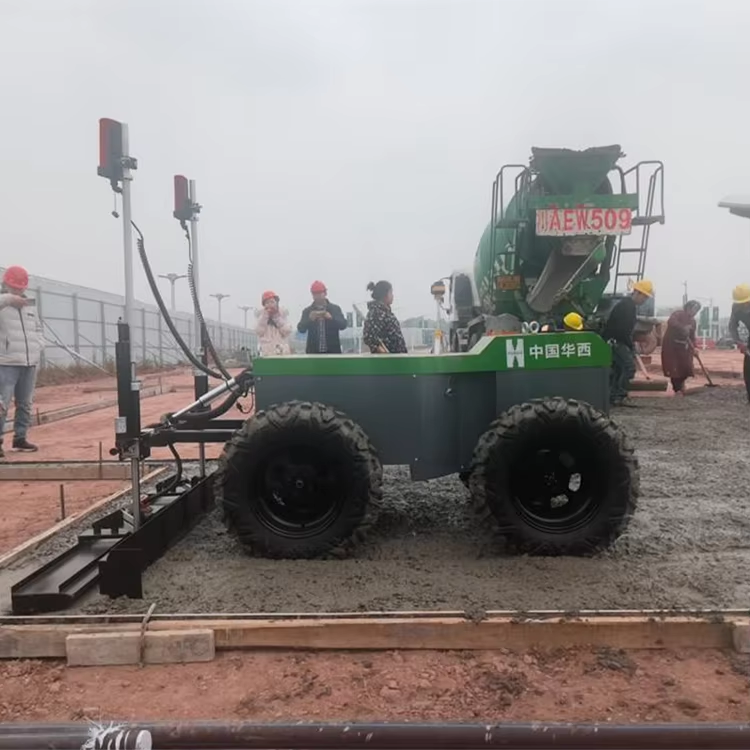
Data fusion (GPS, IMU, inertial sensors) powering AI-driven grade correction for consistent concrete paving
Advanced concrete paving systems fuse data from GPS, IMUs, and inertial sensors to build dynamic terrain models updated at 100Hz. AI algorithms process this stream to predict and correct grade deviations before they manifest—enabling proactive, not reactive, control. Machine learning models analyze historical paving patterns to optimize vibration frequency and head speed in real time, adapting to variable subgrade conditions. The system automatically adjusts screed height and angle to ensure uniform compaction density and surface elevation. This intelligent automation reduces human error by 40% and delivers pavement smoothness exceeding ASTM E1108 and ISO 8540 standards.
Operational Performance: Production Rates, Environmental Constraints, and Pavement Longevity
Field-proven productivity: 25–35% higher linear placement rates with concrete paving robots under optimal conditions
Concrete paving robots achieve 25–35% higher linear placement rates than traditional asphalt pavers under optimal conditions. This efficiency stems from continuous automated operation, precise material distribution, and elimination of manual grade-checking delays via integrated GPS guidance. Consistent pour speeds and widths—combined with minimal rework due to millimeter-level accuracy—accelerate project timelines and lower labor costs. The technology excels on large-scale infrastructure: properly calibrated systems can place over 1,000 m² per hour, significantly surpassing conventional asphalt throughput on comparable projects.
Weather sensitivity: Why concrete paving demands tighter temperature/humidity control than asphalt
Concrete placement requires strict environmental control—specifically ambient temperatures between 10–30°C and relative humidity above 80%—to support proper cement hydration. Temperatures below 10°C slow strength development and risk freeze-thaw damage; above 30°C, rapid moisture loss triggers plastic shrinkage cracks. Humidity below 80% accelerates surface drying, creating brittle, low-durability layers. Wind and solar radiation further compound these risks. In contrast, asphalt’s primary thermal constraint is mix temperature during laydown (150–160°C), with its cooling phase far less sensitive to ambient conditions than concrete’s 7–28 day curing window. Real-time environmental monitoring is therefore essential for quality assurance in robotic concrete paving—unlike asphalt, where thermal management focuses almost exclusively on equipment and material handling.
Strategic Equipment Selection: When to Choose Concrete Paving Robots Over Asphalt Solutions
Concrete paving robots deliver unmatched value for infrastructure projects prioritizing lifespan, precision, and long-term cost efficiency. Their automated GPS-guided operation reduces labor costs by up to 40% compared to manual methods while achieving sub-centimeter accuracy critical for airports, industrial floors, and heavy-traffic corridors. When lifecycle costs outweigh initial investment—particularly in environments requiring 30+ years of service with minimal maintenance—robotic concrete systems become strategically advantageous. For projects demanding rapid deployment or frequent reconfiguration, asphalt pavers retain thermal flexibility advantages. However, concrete’s superior load distribution, resistance to fuel/oil degradation, and performance in climate-vulnerable regions—where asphalt softening accelerates wear—make it ideal for logistics hubs, ports, and high-resilience infrastructure. The decision ultimately hinges on three factors: project scale (robots excel beyond 10,000 m²), durability requirements, and tolerance for weather delays during curing.
FAQ
What are the main differences between slipform concrete paving robots and asphalt paving machines?
Slipform concrete paving robots use integrated GPS and 3D modeling for precision, while asphalt paving machines focus on maintaining thermal consistency and vibratory compaction.
How does GPS guidance improve the accuracy of concrete paving?
GPS guidance allows slipform robots to achieve sub-centimeter precision by continuously tracking location and making real-time adjustments, significantly improving accuracy over manual methods.
Why is weather control more important for concrete than for asphalt?
Concrete curing requires specific temperature and humidity ranges for hydration, whereas asphalt's primary sensitivity is during the mix's temperature at laydown, which is less affected by ambient conditions.
What factors should be considered when choosing between concrete and asphalt paving machines?
Factors include project scale, durability requirements, initial costs versus lifecycle costs, and environmental or weather constraints.
Table of Contents
- Fundamental Technology Differences: Slipform Concrete Paving Robots vs. Asphalt Paving Machines
- Automation Depth and Intelligence: AI, IoT, and Real-Time Control in Concrete Paving
- Operational Performance: Production Rates, Environmental Constraints, and Pavement Longevity
- Strategic Equipment Selection: When to Choose Concrete Paving Robots Over Asphalt Solutions
-
FAQ
- What are the main differences between slipform concrete paving robots and asphalt paving machines?
- How does GPS guidance improve the accuracy of concrete paving?
- Why is weather control more important for concrete than for asphalt?
- What factors should be considered when choosing between concrete and asphalt paving machines?