 EN
EN

Assessing Project Requirements: Height, Reach, and Load Demands
Understanding High-Rise Construction Demands and Project Scope
Getting the right crane for high rise construction is absolutely essential right from the start of any project. According to recent industry data from CICEM in 2023, around two thirds of buildings standing above forty floors need tower cranes capable of lifting more than twenty tons each time. Looking at structural plans during initial planning stages helps spot those key lifting operations. Curtain wall sections typically need extended reach capabilities, whereas regular shipments of steel reinforcements affect how often the crane needs to operate throughout construction phases. These factors all play into making sure the selected equipment can handle what's required without causing delays down the road.
Determining Required Tower Height and Jump Intervals
The crane needs to be at least 10 to maybe even 15 percent taller than the finished building itself so there's room for those mast extensions when it's time to climb higher. Take a typical 60 story building with a flat top tower crane for instance. Most engineers will schedule around four to six of these jump intervals throughout construction, timing them right with how long the concrete takes to cure properly. Getting this timing right matters a lot because if everything lines up correctly, it keeps things moving forward without unnecessary waits while also making sure the whole structure stays stable against strong winds as it grows skyward floor by floor.
Evaluating Weight and Radius of Critical Lifts
When it comes to crane capacity, most people focus on average loads, but what really matters is the 95th percentile lift requirement. Think about those big HVAC systems or prefabricated staircases that need special handling. A recent look at 18 tall buildings showed something interesting - around seven out of ten had peak lifting capacities ranging from 22 to 28 tons when working beyond 45 meter radius points. Never forget to cross check those official load charts with actual site conditions though. Even with a nice long 50 meter boom, things get tricky when neighboring structures block off nearly a third of the crane's turning space. That kind of restriction can completely change how much weight the machine can safely handle.
Aligning Crane Specifications With Structural Phases
Construction projects that happen in phases really need lifting equipment that can adapt as things progress. When laying foundations, bigger machines with heavy lifting power are essential, but once we get to upper levels, those flat top cranes become invaluable because they take up so much less room on site. The numbers tell us something interesting too. If the hoists aren't positioned correctly, crews end up wasting around 12 to 18 extra man hours just fixing these issues floor after floor. That's why good planning matters so much right from the start. Getting delivery timelines sorted out alongside figuring out where cranes will operate makes all the difference between smooth operations and costly delays down the line.
Flat Top Tower Cranes: Advantages for Urban High-Rise Construction
Reduced Tail Swing and Space Efficiency in Congested City Sites
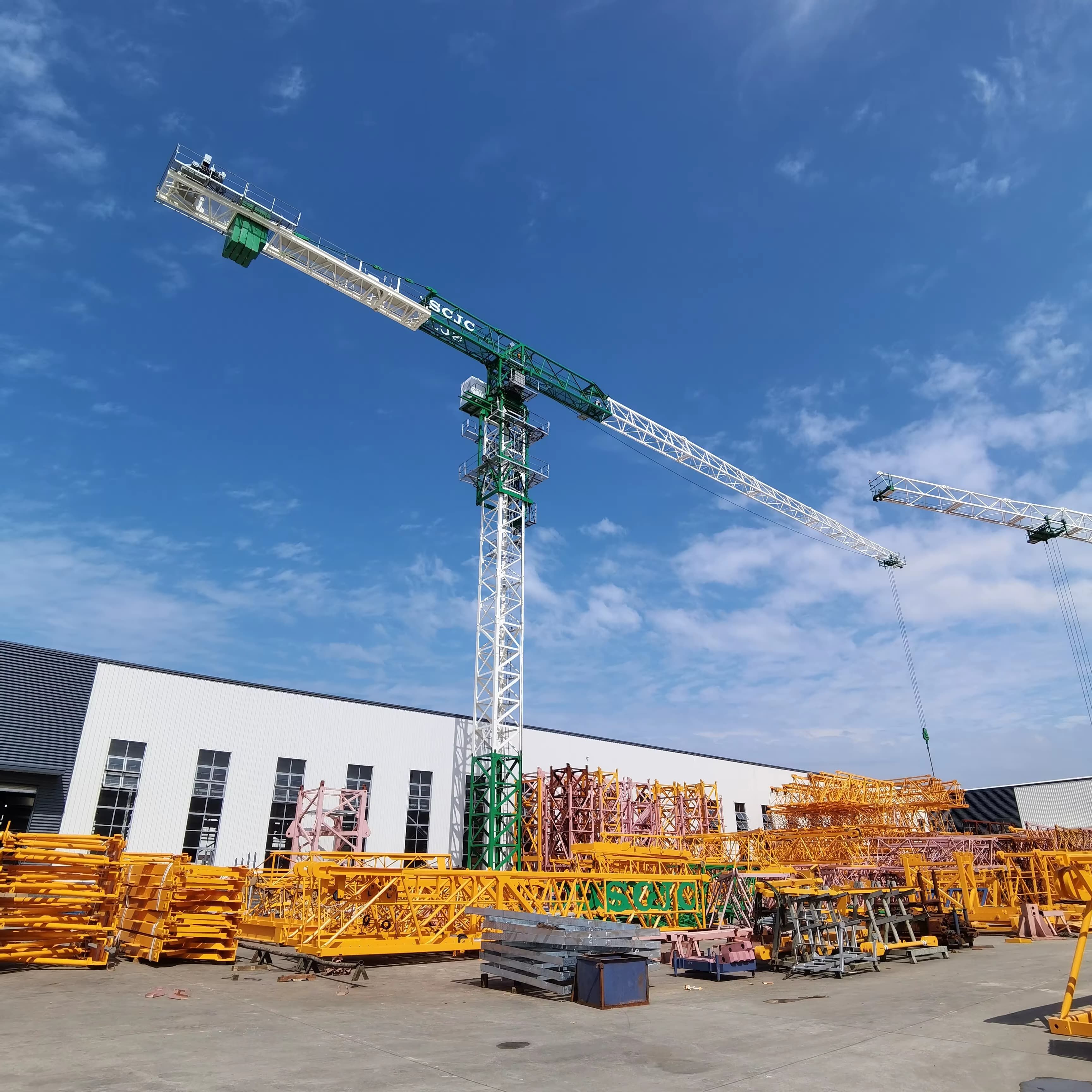
Flat top tower cranes really stand out in tight construction sites because they have this compact design that gets rid of those bulky counter-jibs and A-frames we see on traditional hammerhead models. According to the latest Urban Construction Survey from 2024, these cranes can cut down tail swing by about 40%, which makes all the difference when working next to other buildings or structures. The whole thing is so much slimmer too, meaning contractors can position them right against the actual building outline. This frees up precious ground space where workers need to stage materials and move around safely during operations. Many site managers report that having this extra room actually improves workflow efficiency significantly.
Comparing Flat Top Tower Crane vs. Traditional Hammerhead and Luffer Configurations
| Feature | Flat Top | Hammerhead | Luffer |
|---|---|---|---|
| Tail Swing Radius | 15-20 ft | 30-45 ft | 25-35 ft |
| Assembly Time | 18-24 hours | 32-48 hours | 28-36 hours |
| Height Clearance | None required | 12-18 ft | 8-12 ft |
| Ideal Site Type | Ultra-dense urban | Large open sites | Mixed-height zones |
This efficiency explains why 63% of contractors now prefer flat top cranes for projects on sites under 0.5 acres (2024 Urban Construction Survey).
Selecting Between Hammerhead, Luffer, and Flat Top Cranes Based on Site Constraints
Boom/Jib Length and Tail Swing Considerations in Tight Urban Footprints
Urban high-rises often operate within clearances of 20-30 meters. While hammerhead cranes need 8-12 meters of tail swing, flat top models reduce this to 2-4 meters through optimized counter-jib designs. Deployments in Manhattan show flat top cranes cutting interference with adjacent buildings by up to 75%, significantly improving safety in multi-crane environments.
Luffer Cranes for Limited Overhead Clearance and Variable Radius Needs
When working in areas with limited vertical space like airports or buildings with rooftop helipads, luffing-jib cranes become the go-to solution. Operators can tilt the boom anywhere from around 30 degrees up to nearly 85 degrees, which lets them place loads exactly where needed without losing much lifting power at closer distances. The crane retains about 92 percent of its maximum capacity even when operating at these shorter reach points. Recent research looking at high rise construction across Europe showed something interesting too. Buildings that used luffer cranes instead of traditional hammerhead models actually needed masts that were 25% shorter in places where airspace was tight. This makes sense given how these cranes can adjust their angle so effectively.
When a Flat Top Tower Crane Outperforms Luffers Despite Higher Initial Cost
Although flat top cranes carry a 15-20% higher acquisition cost, their long-term advantages often justify the investment:
- 40% faster assembly due to modular components
- Compatibility with 85% of standard mast sections
- 6x higher utilization rates across multiple project phases
Recent industry data shows flat top cranes now offer capacities exceeding 50 tons while maintaining compact profiles, outperforming luffers in 63% of multi-tower urban developments since 2022.
Ensuring Safety Compliance and Operator Certification
Meeting OSHA, ANSI, and DIN Standards in Crane Selection and Operation
Following OSHA, ANSI, and DIN standards isn't optional when working with cranes on high rise projects. The Construction Safety Journal reported back in 2023 that job sites following these safety rules saw about 62% fewer accidents involving cranes. For anyone looking at flat top tower cranes, checking if they meet DIN 15018 or 15020 specs is important because these standards ensure the structure can handle all sorts of stress during operation. According to ANSI/ASME B30.3-9 regulations, operators need to inspect brakes, load limiters, and collision avoidance systems every single day. This becomes absolutely critical on construction sites where multiple cranes are operating in close proximity to each other.
Importance of Operator Certification, Maintenance Protocols, and Inspection Schedules
Operators who get certified spend well over 200 hours learning all about how loads behave, what to do in emergencies, and proper rigging techniques according to OSHA standards. Every three years they need to go through re-certification so they stay up to date on new equipment like those automatic load moment indicators that have become pretty common lately. Some research from 2024 looked at around 1,200 different worksites and discovered something interesting: when crews did their daily checks before starting operations, there was an 81% drop in mechanical breakdowns. That's why most good operators stick religiously to their checklists, making sure everything from the condition of wire ropes to any potential hydraulic leaks gets checked, not to mention those boom sensors. For flat top cranes specifically, regular maintenance matters a lot because their modular parts tend to wear down faster during important lifting operations if neglected.
FAQs
What are the advantages of using flat top tower cranes?
Flat top tower cranes offer advantages such as reduced tail swing, space efficiency in congested sites, faster assembly due to modular components, and higher utilization rates across multiple project phases.
When should luffer cranes be used?
Luffer cranes are ideal for areas with limited vertical space, such as airports or buildings with rooftop helipads. They offer adjustable jib angles which allow operators to place loads efficiently without losing capacity.
Why is operator certification important?
Operator certification is crucial for ensuring that crane operators are trained in safety procedures and proper equipment handling, which reduces the risk of accidents and mechanical breakdowns.