 EN
EN

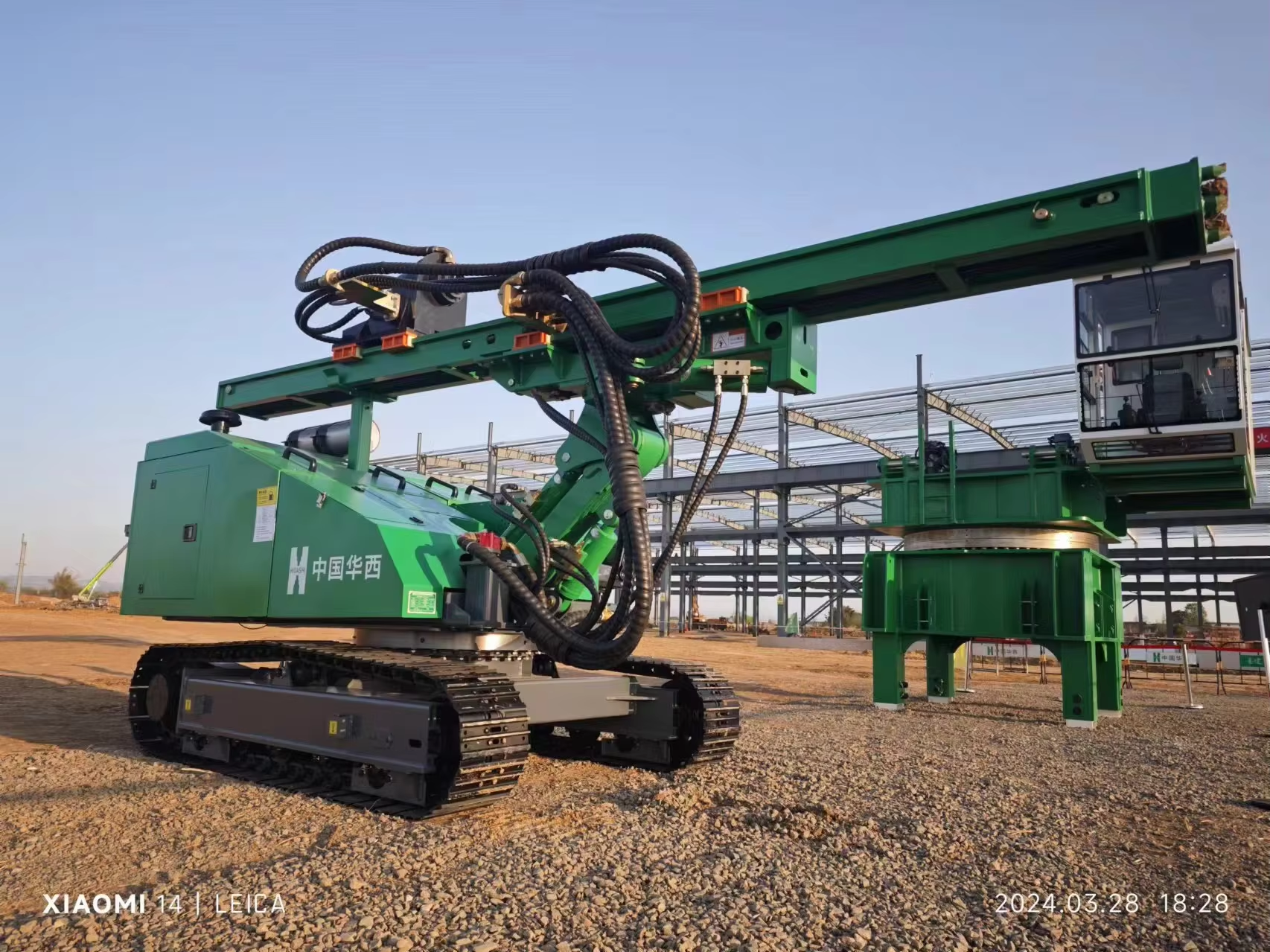
Foundation work stands as the critical first phase of any construction project, determining structural integrity, load-bearing capacity, and long-term stability. Traditional foundation installation methods often require multiple specialized machines, extensive site preparation, and prolonged project timelines. Multifunctional pile drivers have emerged as transformative equipment that addresses these challenges by consolidating multiple foundation capabilities into a single platform, fundamentally changing how contractors approach ground engineering tasks across residential, commercial, and infrastructure projects.
The evolution of multifunctional pile drivers represents a significant advancement in construction equipment technology, driven by industry demands for greater efficiency, reduced operational costs, and improved site logistics. These advanced machines integrate drilling, driving, and excavation functions within a unified hydraulic system, enabling contractors to handle diverse soil conditions and foundation requirements without equipment changeovers. Understanding how multifunctional pile drivers improve foundation work requires examining their operational mechanisms, practical applications, and measurable impact on project outcomes across various construction scenarios.
Core Mechanisms That Enhance Foundation Installation Efficiency
Integrated Hydraulic Power Systems
Multifunctional pile drivers utilize sophisticated hydraulic power distribution systems that enable seamless transitions between different foundation installation modes. The centralized hydraulic architecture delivers consistent force output across drilling, impact driving, and augering operations, eliminating the power inefficiencies associated with switching between separate machines. This integrated approach maintains optimal torque and pressure levels regardless of the selected function, ensuring uniform installation quality across the entire foundation array.
The hydraulic system's adaptive pressure management automatically adjusts to varying ground resistance encountered during penetration. When operators encounter dense soil layers or bedrock formations, the system increases hydraulic pressure to maintain steady progress without manual intervention. Conversely, in softer soil conditions, the system moderates power delivery to prevent over-penetration or pile damage. This intelligent power modulation reduces fuel consumption by an average of eighteen to twenty-five percent compared to conventional single-function equipment, while simultaneously extending component service life through reduced mechanical stress.
Rapid Function Conversion Capabilities
The defining characteristic that sets multifunctional pile drivers apart lies in their ability to switch between operational modes with minimal downtime. Modern units feature quick-coupling mechanisms that allow operators to transition from rotary drilling to impact driving in under fifteen minutes, compared to the several hours required for traditional equipment changeovers. This rapid conversion capability becomes particularly valuable on projects requiring mixed foundation types, where different pile installation methods must be employed across the same site due to varying soil profiles or structural load requirements.
These machines employ standardized attachment interfaces that accommodate various working tools including auger heads, impact hammers, vibratory drivers, and continuous flight augers. The universal mounting system eliminates compatibility issues and reduces the inventory of specialized adapters contractors must maintain. During actual field operations, this versatility allows foundation crews to respond immediately to unexpected subsurface conditions without waiting for equipment delivery, maintaining project momentum even when geological surveys prove incomplete or inaccurate.
Precision Depth and Alignment Control
Advanced multifunctional pile drivers incorporate electronic depth measurement systems and laser-guided vertical alignment technology that ensures each foundation element meets exact specifications. The digital monitoring interfaces provide real-time feedback on pile depth, verticality deviation, and penetration resistance, enabling operators to make immediate adjustments during installation. This precision control reduces the incidence of rejected piles due to alignment errors, which historically account for five to eight percent of foundation rework costs on complex projects.
The alignment systems utilize dual-axis inclinometers that detect angular deviation as small as zero-point-two degrees from vertical, triggering visual and audible alerts when correction becomes necessary. This level of precision proves especially critical in seismic zones where foundation alignment directly affects structural performance during ground motion events. Contractors report that the implementation of these control systems has reduced surveying requirements by approximately forty percent while improving first-pass acceptance rates to above ninety-five percent on projects subject to stringent engineering oversight.
Operational Advantages Across Diverse Project Types
Site Access and Maneuverability Benefits
Multifunctional pile drivers typically feature compact footprints and articulated crawler systems that navigate confined urban construction sites where space constraints prevent deployment of larger specialized equipment. The reduced machine dimensions allow foundation work to proceed in areas with overhead obstructions, narrow access corridors, or proximity to existing structures. This accessibility advantage becomes particularly significant during urban infill development, where foundation installation must occur within tight property boundaries without encroaching on adjacent parcels or public right-of-way.
The crawler undercarriage systems employed on modern multifunctional pile drivers distribute machine weight across broader surface areas, reducing ground pressure to levels compatible with temporary work platforms or recently filled sites. This weight distribution prevents surface rutting and subsidence that would otherwise require extensive site remediation. Contractors working on environmentally sensitive sites appreciate that the reduced ground disturbance minimizes impact on protected vegetation and drainage patterns, facilitating compliance with environmental protection requirements that govern construction activity in wetland buffers or conservation areas.
Adaptation to Variable Soil Conditions
Foundation sites rarely present uniform subsurface conditions across their entire extent, with soil composition typically varying in density, moisture content, and bearing capacity even within relatively small areas. Multifunctional pile drivers address this variability through their ability to employ different installation techniques optimized for specific ground conditions. In cohesive clay soils, the equipment operates in continuous flight auger mode to prevent sidewall collapse, while in granular materials, impact driving or vibratory methods prove more effective for achieving required embedment depths.
The operational flexibility extends to managing obstacles commonly encountered during foundation installation, including buried debris, relict foundations from previous structures, or localized rock formations. When standard drilling encounters resistance beyond normal parameters, operators can switch to impact or oscillation modes that break through obstructions without withdrawing the pile or relocating to alternative positions. This obstacle management capability reduces the incidence of abandoned pile locations, which typically add eight to twelve percent to foundation material costs through wasted piles and additional drilling attempts.
Enhanced Productivity Metrics
Time-motion studies conducted across multiple commercial foundation projects demonstrate that multifunctional pile drivers achieve installation rates twenty-eight to thirty-five percent higher than traditional single-function equipment fleets. The productivity gains stem from eliminated equipment mobilization time, reduced crew idle periods during tool changes, and the ability to maintain continuous operation despite varying subsurface conditions. On a typical mid-rise building foundation requiring three hundred piles of mixed types, this efficiency improvement translates to completion time reductions of four to six working days.
The consolidated equipment approach also streamlines project logistics by reducing the number of machines requiring daily maintenance, fuel delivery, and operator assignment. Foundation contractors report that deploying multifunctional pile drivers reduces their on-site equipment fleet by forty to fifty percent compared to traditional approaches, freeing valuable staging area space for material storage or other construction activities. The simplified equipment inventory decreases coordination complexity and reduces the risk of scheduling conflicts when multiple trades require simultaneous site access during compressed project timelines.
Cost Optimization Through Equipment Consolidation
Capital Investment Considerations
While multifunctional pile drivers represent higher initial capital expenditure compared to single-purpose equipment, the financial analysis must account for the elimination of multiple specialized machines from contractor fleets. A comprehensive foundation equipment package traditionally requires separate drilling rigs, impact hammers, vibratory drivers, and associated support vehicles, with combined acquisition costs often exceeding the price of a single multifunctional unit by thirty to forty-five percent. The consolidated investment approach also simplifies financing arrangements and reduces insurance premiums associated with maintaining diverse equipment inventories.
The residual value retention of multifunctional pile drivers surpasses that of specialized equipment due to broader market appeal and application versatility. When contractors eventually dispose of or trade equipment, multifunctional units command higher resale prices because potential buyers recognize their utility across diverse project types. Industry equipment valuation data indicates that well-maintained multifunctional pile drivers retain approximately sixty-five to seventy percent of original value after five years of service, compared to forty-five to fifty-five percent retention for comparable single-function machines over the same period.
Operating Expense Reduction
Daily operating costs decrease substantially when multifunctional pile drivers replace multiple specialized machines, primarily through reduced fuel consumption, simplified maintenance schedules, and lower operator labor requirements. A single multifunctional unit typically consumes twenty to thirty gallons of diesel fuel per eight-hour shift, whereas a traditional equipment package performing equivalent work burns thirty-five to fifty gallons across the multiple machines required. Over a typical foundation installation project spanning several weeks, these fuel savings accumulate to thousands of dollars while simultaneously reducing project carbon emissions.
Maintenance cost advantages emerge from the standardized component systems employed throughout multifunctional pile drivers, which allow technicians to maintain expertise on a single machine platform rather than mastering multiple equipment types. The consolidated hydraulic systems share common filters, seals, and pumps across different operational modes, reducing spare parts inventory costs and minimizing the likelihood of project delays due to unavailable components. Contractors report maintenance expense reductions of twenty-two to twenty-eight percent when transitioning from diverse equipment fleets to multifunctional platforms, with additional savings realized through decreased downtime during routine service intervals.
Project-Level Financial Impact
Foundation installation typically represents twelve to eighteen percent of total construction budgets on building projects, making even modest efficiency improvements financially significant. The productivity gains delivered by multifunctional pile drivers translate directly to reduced project durations, which decrease general conditions costs including site supervision, temporary facilities, and project insurance. On a representative commercial building project with a foundation budget of eight hundred thousand dollars, the implementation of multifunctional equipment can reduce foundation phase duration by one to two weeks, saving twenty-five to forty thousand dollars in time-related overhead expenses.
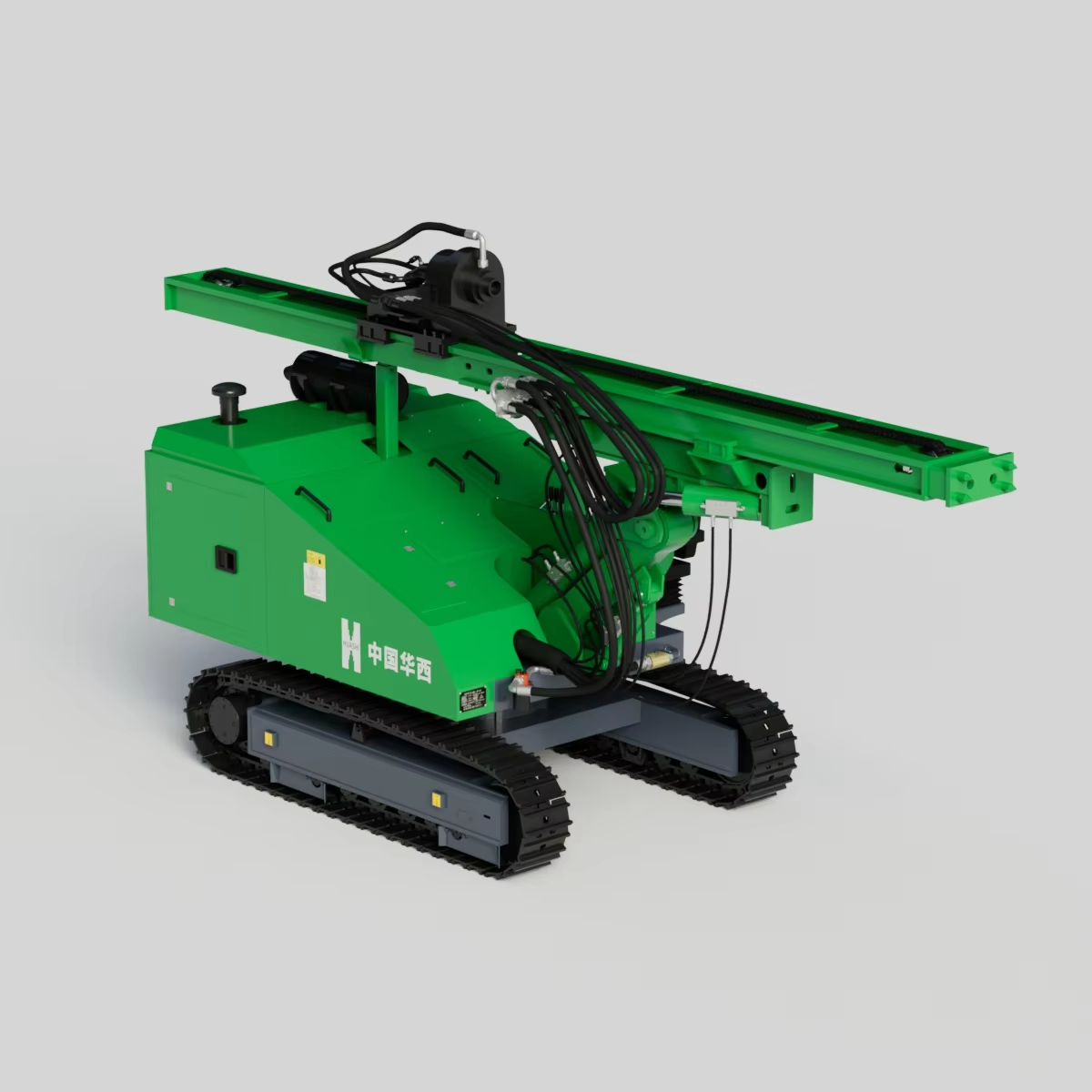
The equipment's ability to handle unexpected subsurface conditions without mobilizing additional specialized machines provides valuable protection against contingency budget depletion. Traditional foundation approaches often require contractors to maintain reserve equipment capacity or pay premium rates for emergency equipment rental when unanticipated ground conditions emerge. Multifunctional pile drivers effectively internalize this contingency capability, allowing contractors to respond to site variations without triggering change order processes or depleting financial reserves intended for other project risks.
Quality Improvements and Risk Mitigation
Consistency Across Foundation Elements
The standardized installation parameters maintained by multifunctional pile drivers contribute to superior consistency across all foundation elements within a project. When multiple machines perform foundation work, variations in equipment condition, operator technique, and calibration settings inevitably introduce installation inconsistencies that can affect long-term structural performance. Single-machine installations eliminate these sources of variation, ensuring that each pile experiences identical installation forces, penetration rates, and quality control monitoring throughout the foundation array.
The digital monitoring systems integrated into modern multifunctional pile drivers automatically document installation parameters for every foundation element, creating comprehensive quality records without additional data collection labor. These electronic installation logs capture depth, penetration resistance, verticality, and operational anomalies in real-time, providing engineering teams with detailed verification data that supports structural certification processes. The automated documentation reduces quality assurance costs while providing superior evidentiary records in the unlikely event of future performance disputes or structural investigations.
Reduced Geotechnical Risk Exposure
Foundation contractors face substantial financial risk when subsurface conditions deviate from geotechnical investigation predictions, potentially requiring costly installation method changes or foundation redesign. Multifunctional pile drivers mitigate this risk by providing immediate adaptation capability when unexpected soil profiles, groundwater conditions, or buried obstacles emerge during installation. The equipment's versatility allows contractors to modify installation approaches in response to field conditions without project delays or extensive redesign efforts that would otherwise consume contingency budgets and extend schedules.
The operational flexibility proves particularly valuable on sites where preliminary geotechnical investigations employed limited boring locations or depths, leaving substantial uncertainty about subsurface conditions across the full project extent. Rather than assuming uniform conditions and risking installation failures, contractors using multifunctional pile drivers can adjust techniques pile-by-pile based on actual encountered conditions. This responsive approach reduces the probability of foundation performance issues while avoiding the excessive conservatism that inflates foundation costs when engineers design for worst-case soil assumptions across entire sites.
Safety Performance Enhancement
Workplace safety metrics improve measurably when multifunctional pile drivers replace traditional equipment fleets, primarily through reduced equipment movement requirements and simplified site traffic patterns. Each equipment mobilization, repositioning, or changeover introduces potential incidents involving personnel, adjacent workers, or existing structures. By consolidating foundation functions into single machines that remain positioned throughout installation sequences, multifunctional approaches eliminate numerous daily equipment movements that would otherwise occur on sites employing specialized single-function machines.
The enclosed operator cabins featured on modern multifunctional pile drivers provide superior protection from environmental hazards including noise, vibration, dust, and inclement weather compared to open-platform equipment common among older specialized machines. The environmental isolation improves operator alertness and decision-making capability during extended shifts, reducing the incidence of attention-related errors that compromise installation quality or trigger safety incidents. Contractors report that projects employing enclosed-cab multifunctional equipment experience recordable incident rates approximately thirty percent lower than comparable work performed with traditional open-cab or platform-mounted foundation equipment.
Strategic Selection and Deployment Considerations
Project Suitability Assessment
While multifunctional pile drivers deliver substantial advantages across most foundation scenarios, optimal equipment selection requires careful evaluation of specific project characteristics and site conditions. Projects involving predominantly uniform soil profiles and single foundation types may not fully utilize the equipment's versatility, potentially making specialized single-function machines more economical choices. Conversely, sites with documented soil variability, mixed foundation requirements, or space constraints that complicate equipment staging represent ideal applications where multifunctional capabilities provide maximum value.
The equipment proves especially advantageous on phased development projects where foundation installation occurs incrementally over extended periods. Rather than maintaining diverse equipment inventories to accommodate varying requirements across project phases, contractors can deploy multifunctional units that adapt to each phase's specific needs. This approach reduces equipment mobilization costs between phases and maintains consistent installation quality standards throughout multi-year development timelines. Urban renewal projects and campus developments frequently demonstrate this phased application pattern where multifunctional pile drivers deliver sustained value across successive construction stages.
Operator Training and Competency Development
The sophisticated control systems and multiple operational modes featured in multifunctional pile drivers require comprehensive operator training programs that exceed the preparation needed for single-function equipment. Contractors must invest in structured training that develops operator competency across all machine functions, including proper technique for mode transitions, interpretation of digital monitoring displays, and recognition of conditions requiring operational adjustments. The training investment typically requires forty to sixty hours of combined classroom and hands-on instruction, compared to twenty to thirty hours for conventional single-function equipment orientation.
Despite the expanded training requirements, the consolidated operator skill set delivers long-term workforce advantages by creating more versatile personnel capable of addressing diverse project needs. Operators qualified on multifunctional platforms command higher compensation due to their broader capabilities, but contractors benefit from reduced crew size requirements and simplified personnel scheduling. The workforce efficiency gains become particularly apparent during equipment shortages or personnel absences, when cross-trained operators can maintain productivity across varied foundation tasks without requiring specialized personnel for each equipment type.
Maintenance Infrastructure Requirements
Effective deployment of multifunctional pile drivers requires maintenance capabilities appropriate to the equipment's sophisticated hydraulic and electronic systems. Contractors must ensure their service departments possess diagnostic tools, technical documentation, and component inventories necessary to support the integrated systems that enable multi-mode operation. The maintenance infrastructure investment includes specialized hydraulic testing equipment, electronic diagnostic interfaces, and technician training on the specific platforms deployed within contractor fleets.
The maintenance planning must account for the reality that multifunctional pile drivers represent critical-path equipment whose downtime immediately halts all foundation installation activity, unlike specialized equipment fleets where backup units can substitute for failed machines. Contractors typically implement preventive maintenance protocols more rigorous than those applied to single-function equipment, including daily pre-operation inspections, frequent fluid sampling to monitor system condition, and proactive component replacement before predicted failure intervals. These enhanced maintenance practices increase daily equipment care costs by approximately fifteen to twenty percent but deliver substantial returns through improved reliability and reduced unplanned downtime that would otherwise delay project completion.
FAQ
What foundation types can multifunctional pile drivers install effectively?
Multifunctional pile drivers accommodate virtually all common foundation pile types including driven steel piles, cast-in-place concrete piles, helical anchors, micropiles, and drilled shafts. The equipment handles precast concrete piles through impact driving modes, installs continuous flight auger piles via rotary drilling functions, and places displacement piles using specialized drilling techniques. Most units effectively work with pile diameters ranging from twelve inches to forty-eight inches and depths extending to one hundred feet or more, depending on specific machine specifications and ground conditions. The versatility extends to both structural foundation applications and specialized uses including soil stabilization, underpinning existing structures, and earth retention systems where various pile installation methods suit different project requirements.
How do multifunctional pile drivers perform in challenging soil conditions like bedrock or very soft soils?
These machines excel in variable ground conditions precisely because operators can select installation methods optimized for specific subsurface challenges. When encountering bedrock or very dense soil layers, operators engage percussion drilling or down-the-hole hammer functions that apply concentrated impact forces to penetrate resistant materials. In soft cohesive soils prone to sidewall collapse, continuous flight auger modes maintain borehole stability during drilling and concrete placement. Very soft soils with low bearing capacity benefit from displacement pile installation techniques that densify surrounding material during penetration. The equipment's adaptability allows real-time method adjustment as soil conditions change with depth, ensuring effective installation regardless of geological complexity encountered during foundation work.
What maintenance intervals and service requirements apply to multifunctional pile drivers?
Maintenance schedules for multifunctional pile drivers typically follow similar intervals to other heavy hydraulic equipment, with daily inspections covering fluid levels, hydraulic hoses, and structural components before each shift. Engine oil and filter changes occur every two hundred fifty operating hours, while hydraulic fluid replacement happens annually or every two thousand hours depending on operating conditions and fluid analysis results. The quick-coupling mechanisms and tool attachment points require inspection and lubrication every fifty hours to maintain proper function and prevent premature wear. Most manufacturers recommend comprehensive system diagnostics and component inspection at thousand-hour intervals, performed by factory-trained technicians who verify proper calibration of electronic control systems and hydraulic pressure settings across all operational modes.
Can existing foundation contractors transition to multifunctional equipment without extensive fleet replacement?
Foundation contractors can adopt multifunctional pile drivers incrementally without immediately retiring their entire specialized equipment inventories. The practical transition approach involves acquiring multifunctional units for new projects while retaining existing specialized machines for maintenance work, small projects, or backup capacity during peak demand periods. As specialized equipment reaches end-of-service life or requires major overhaul, contractors replace those units with additional multifunctional platforms rather than purchasing equivalent single-function machines. This gradual fleet evolution typically occurs over five to seven years, allowing contractors to realize operational benefits from multifunctional equipment while avoiding the financial disruption of wholesale fleet replacement and maintaining familiar equipment options during the transition period.
Table of Contents
- Core Mechanisms That Enhance Foundation Installation Efficiency
- Operational Advantages Across Diverse Project Types
- Cost Optimization Through Equipment Consolidation
- Quality Improvements and Risk Mitigation
- Strategic Selection and Deployment Considerations
-
FAQ
- What foundation types can multifunctional pile drivers install effectively?
- How do multifunctional pile drivers perform in challenging soil conditions like bedrock or very soft soils?
- What maintenance intervals and service requirements apply to multifunctional pile drivers?
- Can existing foundation contractors transition to multifunctional equipment without extensive fleet replacement?