 EN
EN

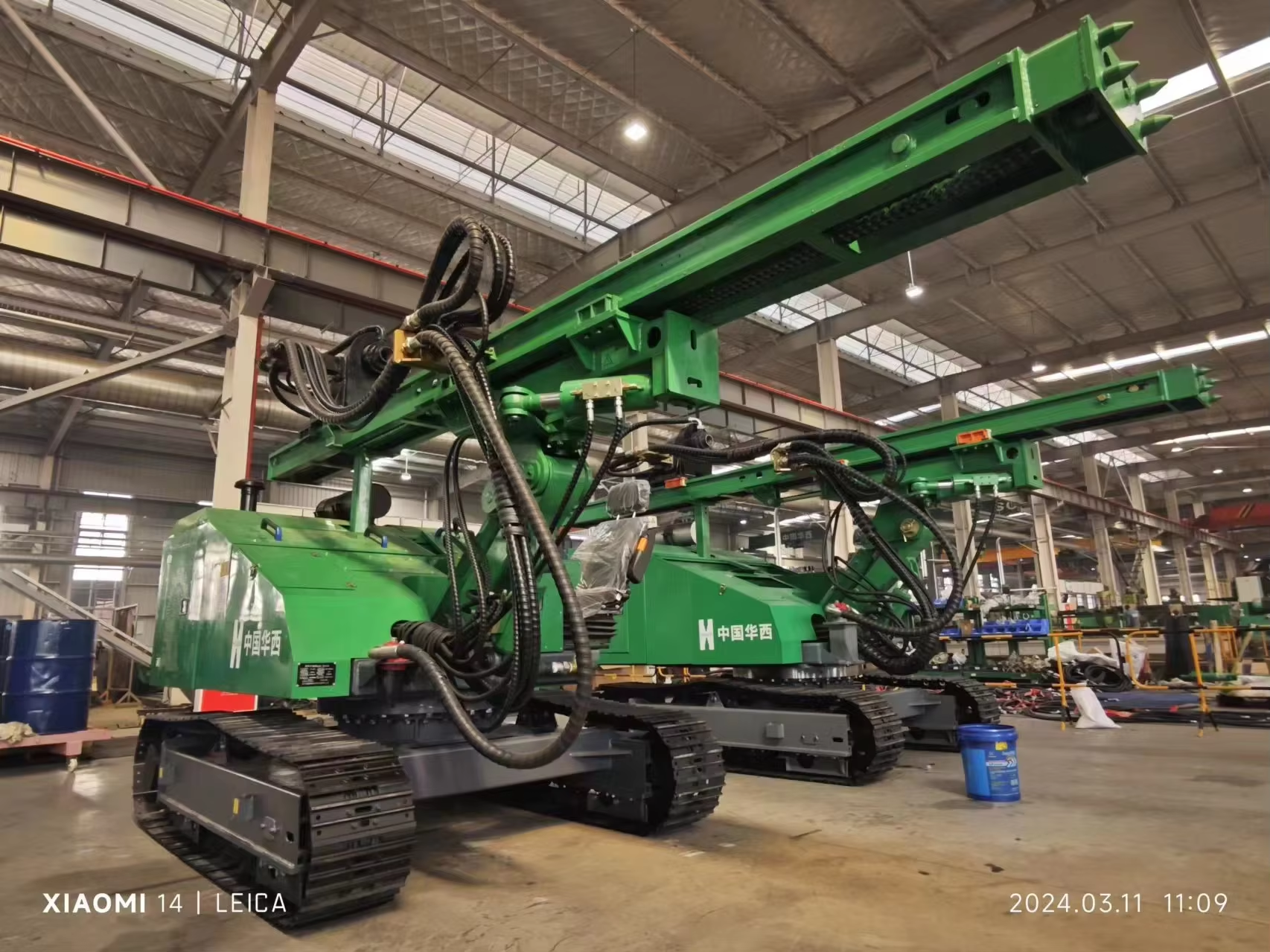
Modern construction projects demand equipment that can adapt to diverse ground conditions, complex site requirements, and tight project timelines. Multifunctional pile drivers have emerged as essential machinery for contractors seeking to optimize foundation work efficiency while reducing overall project costs. These versatile machines combine multiple drilling and piling capabilities within a single platform, enabling construction teams to handle various soil types, foundation depths, and structural requirements without the need for multiple specialized units. Understanding the full spectrum of advantages that multifunctional pile drivers bring to construction sites helps project managers make informed equipment investment decisions that directly impact project profitability and operational flexibility.
The construction industry continues to evolve toward integrated solutions that maximize productivity per equipment unit, and multifunctional pile drivers represent a significant advancement in this direction. By consolidating rotary drilling, down-the-hole hammer capabilities, and traditional pile driving functions into one hydraulic platform, these machines eliminate the logistical challenges and downtime associated with equipment changeovers. For contractors working on projects ranging from residential developments to infrastructure construction, the strategic benefits extend beyond mere operational convenience to encompass financial performance, safety improvements, and competitive positioning in an increasingly demanding marketplace.
Enhanced Operational Efficiency and Project Timeline Advantages
Elimination of Equipment Downtime During Method Transitions
Traditional construction sites often require multiple foundation equipment types to address varying subsurface conditions encountered during excavation. When contractors rely on separate machines for different drilling methods, significant time losses occur during equipment mobilization, demobilization, and site repositioning. Multifunctional pile drivers eliminate these transition periods by incorporating multiple drilling technologies within a single chassis, allowing operators to switch between rotary drilling, DTH hammering, and pile driving modes without relocating equipment. This seamless transition capability proves particularly valuable when unexpected geological conditions require immediate method adjustments, enabling continuous foundation work without the costly delays that typically accompany equipment changes.
The hydraulic systems integrated into multifunctional pile drivers facilitate rapid mode switching through automated or semi-automated controls that adjust pressure, torque, and percussion parameters according to the selected method. Operators can respond to real-time ground conditions by modifying drilling approaches within minutes rather than hours, maintaining project momentum even when encountering rock layers, water-bearing strata, or other challenging subsurface features. This adaptability translates directly into compressed project schedules, as foundation work that might traditionally require sequential phases with different equipment can now progress continuously under a unified operational approach.
Simultaneous Task Capability in Varied Site Conditions
Construction sites frequently present diverse foundation requirements across different building zones, with some areas demanding deep foundation solutions while others require shallower support systems. Multifunctional pile drivers address this heterogeneity by enabling contractors to tackle multiple foundation types without mobilizing additional specialized equipment. A single machine can complete deep rotary-drilled piles in one site section during morning hours, then transition to percussion drilling for smaller-diameter foundation elements in another area during the afternoon, maximizing daily productivity and ensuring uniform progress across all project zones.
This versatility becomes especially valuable in urban construction environments where site access constraints limit the number of machines that can operate simultaneously. Rather than coordinating schedules for multiple pieces of equipment competing for limited workspace, project managers can deploy multifunctional pile drivers that handle diverse requirements independently. The resulting workflow simplification reduces coordination overhead, minimizes traffic congestion on crowded sites, and allows smaller crews to accomplish foundation work that would traditionally require larger teams managing multiple specialized machines.
Reduced Mobilization and Setup Requirements
Each equipment mobilization event involves transportation costs, setup time, operator familiarization, and calibration procedures that consume project resources without directly advancing construction progress. By consolidating multiple capabilities into multifunctional pile drivers, contractors dramatically reduce the frequency of these mobilization events. A project that might traditionally require three separate equipment mobilizations—one for auger drilling, another for rock hammer work, and a third for pile installation—can now proceed with a single mobilization of one versatile machine, cutting logistical complexity by two-thirds.
The financial implications extend beyond direct transportation savings to include reduced site preparation requirements, simplified utility coordination, and decreased permitting complexity in jurisdictions where equipment type and quantity influence approval processes. Additionally, fewer mobilization events mean reduced environmental impact from transportation activities, supporting sustainability objectives that increasingly influence project selection and public perception in competitive bidding environments.
Substantial Cost Reduction Through Equipment Consolidation
Lower Capital Investment for Comprehensive Capability
Acquiring separate specialized machines for rotary drilling, percussion drilling, and pile driving represents a substantial capital commitment that many contractors find difficult to justify, particularly when individual equipment types experience inconsistent utilization across diverse project portfolios. Multifunctional pile drivers present a more economically rational investment by delivering multiple capabilities at a purchase price typically ranging from sixty to seventy-five percent of the combined cost of equivalent standalone machines. This capital efficiency enables contractors to access comprehensive foundation capabilities without the financial burden of maintaining a large, specialized equipment fleet.
The investment advantage becomes even more pronounced when considering equipment depreciation patterns and technological obsolescence. Owning three separate machines means managing three depreciation schedules and facing three separate replacement decisions as technology advances. Multifunctional pile drivers consolidate this complexity into a single asset management decision, simplifying financial planning and potentially extending useful equipment life through more consistent utilization patterns that prevent the deterioration associated with prolonged storage periods between specialized applications.
Reduced Operational and Maintenance Expenses
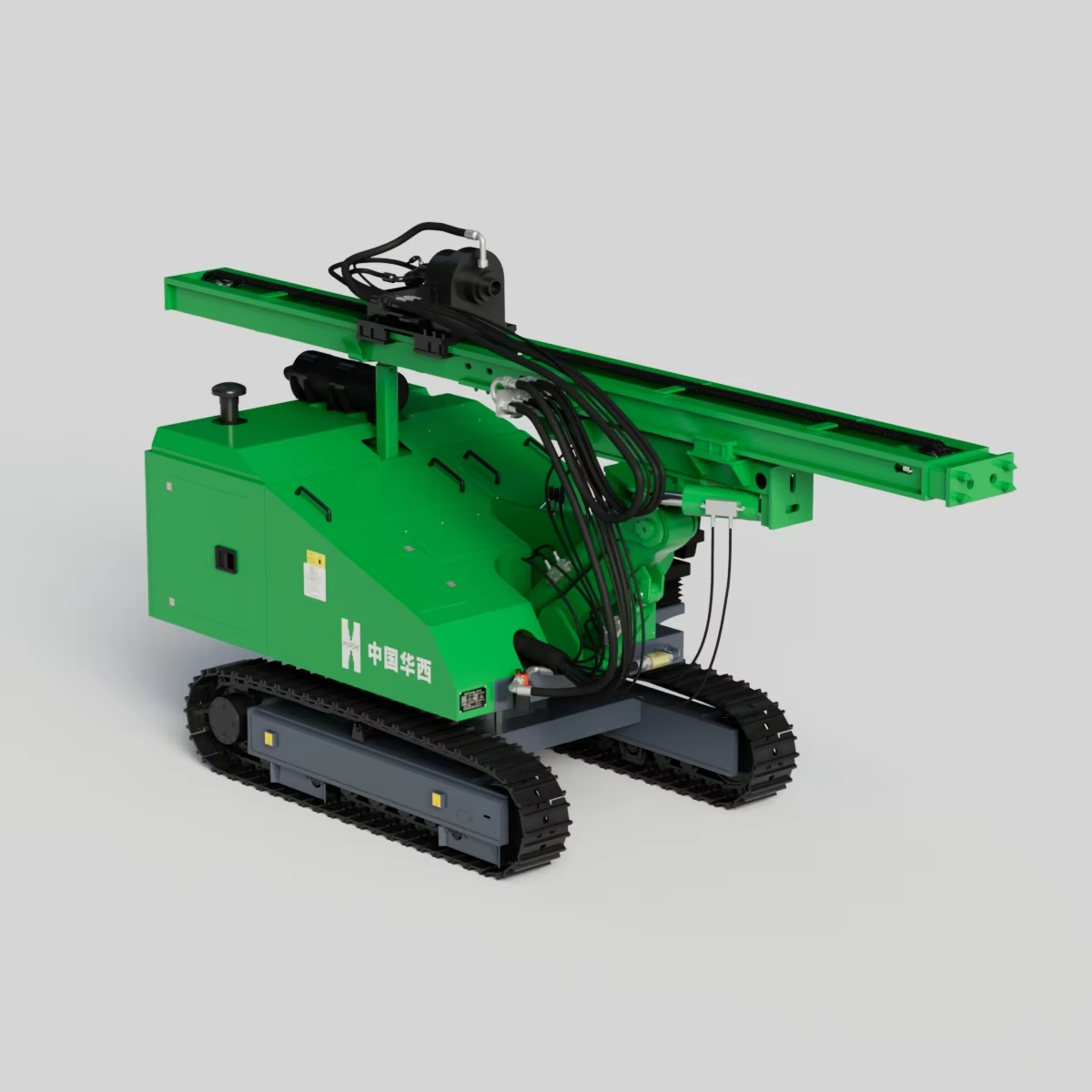
Operating multiple foundation machines generates multiplicative costs across fuel consumption, routine maintenance, spare parts inventory, insurance premiums, and operator wages. Each additional machine introduces another maintenance schedule to coordinate, another parts inventory to stock, another insurance policy to manage, and potentially another certified operator to employ. Multifunctional pile drivers consolidate these expenses by centralizing operational requirements into a single equipment platform with unified maintenance protocols, shared hydraulic systems, and integrated diagnostic capabilities that streamline upkeep procedures.
The hydraulic integration characteristic of modern multifunctional pile drivers creates maintenance efficiencies beyond simple consolidation. Rather than maintaining separate hydraulic systems for each drilling method—each with distinct pressure ranges, filtration requirements, and service intervals—operators work with a unified hydraulic architecture designed for multi-method application. This integration reduces hydraulic fluid inventory requirements, simplifies filter replacement schedules, and enables centralized condition monitoring that detects potential issues before they escalate into costly failures, ultimately extending component life and reducing unexpected downtime.
Improved Equipment Utilization Rates
Specialized equipment often experiences poor utilization rates because market demand for specific capabilities fluctuates with project mix and economic conditions. A contractor might maintain a DTH hammer drill that operates intensively during rock-heavy projects but sits idle for months between such opportunities, generating ownership costs without producing revenue. Multifunctional pile drivers address this utilization challenge by ensuring equipment remains productive across varied project types, as the machine can contribute value regardless of whether a project requires rotary drilling, percussion methods, or conventional pile installation.
Higher utilization rates improve return on investment calculations by distributing fixed ownership costs across more billable operating hours. A multifunctional pile driver operating three hundred days annually generates substantially better financial returns than three specialized machines that collectively operate the same total hours but require three times the capital investment and maintenance infrastructure. This utilization advantage strengthens competitive bidding positions by enabling contractors to offer foundation services at rates that reflect efficient asset deployment rather than underutilized specialized equipment overhead.
Superior Adaptability to Geological Variations and Site Challenges
Real-Time Response to Unexpected Subsurface Conditions
Geotechnical investigations provide valuable subsurface information, but ground conditions frequently deviate from preliminary assessments due to sampling limitations, spatial variability, and the inherent unpredictability of natural geological formations. When contractors encounter unexpected rock layers, water-bearing zones, or unstable soils using specialized equipment optimized for different conditions, project delays and cost overruns often follow as alternative equipment must be sourced and mobilized. Multifunctional pile drivers mitigate this risk by providing on-site flexibility to adjust drilling methods immediately upon encountering geological surprises.
This adaptability proves particularly valuable in regions with complex geology where glacial deposits, weathered bedrock interfaces, and heterogeneous fill materials create challenging foundation conditions. An operator who encounters unexpected bedrock while performing rotary drilling can transition to DTH percussion mode without leaving the drilling location, maintaining progress through the resistant layer before returning to rotary methods in deeper, more favorable strata. This responsive capability transforms potentially disruptive geological variations into minor operational adjustments rather than project-threatening obstacles.
Accommodation of Mixed Foundation Design Requirements
Contemporary construction projects increasingly feature mixed foundation systems that optimize structural support by matching foundation type to local loading conditions and soil characteristics. A single building might incorporate deep rotary-drilled piles beneath heavily loaded core areas, smaller percussion-drilled elements under perimeter walls, and driven piles for intermediate support zones. Executing such designs with specialized equipment requires careful coordination of multiple machines and crews, creating scheduling complexity and potential conflicts over workspace allocation.
Multifunctional pile drivers simplify mixed foundation execution by enabling a single operator to complete all foundation elements systematically, working through the site in a logical progression rather than orchestrating multiple specialized crews. This unified approach reduces coordination overhead, minimizes workspace conflicts, and ensures consistent quality standards across all foundation types since the same equipment and operator handle all elements. Project managers gain scheduling flexibility as foundation work progresses independently of external equipment availability, insulating timelines from the supply constraints that affect specialized drilling contractors during peak construction periods.
Enhanced Performance in Restricted Access Environments
Urban construction, brownfield redevelopment, and infrastructure projects in developed areas frequently involve sites with limited access routes, overhead clearance restrictions, and constrained work zones that complicate equipment deployment. Bringing multiple specialized foundation machines into such environments amplifies logistical challenges, potentially requiring temporary structure modifications, utility relocations, or sequential work phases that extend project duration. Multifunctional pile drivers address access constraints by consolidating required capabilities into a single footprint, reducing the site area needed for equipment positioning and minimizing the number of access events that must navigate restricted routes.
The compact operational envelope of modern multifunctional pile drivers, particularly crawler-mounted models with hydraulic track systems, enables work in spaces where multiple specialized machines simply cannot fit simultaneously. This access advantage opens opportunities for contractors to bid competitively on challenging urban projects where foundation work represents a critical path activity. The ability to commence work immediately upon site access rather than staging multiple equipment arrivals can compress project schedules by weeks in situations where access windows are limited by traffic management requirements or adjacent property owner restrictions.
Safety Improvements and Risk Mitigation Benefits
Reduced Equipment Movement and Crew Exposure
Construction site safety statistics consistently identify equipment movement and crew positioning during machine operations as significant risk factors for incidents. Each time foundation equipment must be relocated, rigged for transport, or positioned for operation, workers face exposure to struck-by hazards, pinch points, and other mechanical risks. Projects requiring multiple specialized machines multiply these exposure events proportionally, as each equipment type must be moved, positioned, and coordinated with ground crews throughout the work sequence.
Multifunctional pile drivers substantially reduce movement-related safety exposure by minimizing the frequency of equipment changes and the number of machines operating on site. Fewer machines mean fewer movement events, simplified traffic patterns, and reduced likelihood of worker-equipment interactions during positioning activities. The consolidated approach also simplifies safety planning and toolbox talk content, as crews work with one familiar equipment platform rather than adapting procedures for multiple machine types with varying operational characteristics and hazard profiles.
Simplified Operator Training and Competency Management
Operating specialized foundation equipment safely and effectively requires comprehensive training on machine-specific controls, operational limitations, and emergency procedures. When projects demand multiple equipment types, contractors must either employ operators certified on each machine or invest in cross-training programs that build competency across diverse platforms. Both approaches introduce complexity and potential safety gaps if operator expertise proves uneven across different equipment types or if substitutions become necessary due to scheduling conflicts or personnel availability.
The unified control architecture of multifunctional pile drivers streamlines operator training by consolidating diverse drilling methods under a common interface and operational logic. Once operators master the base machine platform, transitioning between drilling modes involves adjusting operational parameters rather than learning entirely new control schemes. This training efficiency improves operator confidence and competency, directly supporting safer operations as experienced personnel handle all foundation methods. Additionally, smaller operator pools reduce coordination complexity and improve accountability since fewer individuals participate in foundation activities throughout project duration.
Enhanced Stability and Ground Pressure Management
Specialized lightweight drilling equipment sometimes lacks the mass and stability needed for challenging ground conditions, while heavy-duty machines may exert ground pressures that exceed site limitations or risk subsurface utility damage. Constantly changing between equipment types to match capability with conditions introduces risks of improper machine selection that can lead to tip-over incidents, ground subsidence, or utility strikes. Multifunctional pile drivers typically feature robust chassis designs with adjustable track configurations that provide stable operation across varied conditions while maintaining acceptable ground pressure distribution.
The crawler-mounted platforms common in multifunctional pile driver designs distribute machine weight over larger surface areas compared to wheeled alternatives, reducing ground pressure and improving stability on soft or uneven terrain. Hydraulic leveling systems integrated into these platforms enable operators to establish stable working positions on sloped sites without extensive grading, reducing earthwork requirements and associated safety risks. This inherent stability supports safer operations across the full range of drilling methods the machine provides, ensuring consistent safety performance regardless of which capability the project demands at any given moment.
Competitive Advantages and Business Development Opportunities
Expanded Service Offerings Without Proportional Cost Increases
Contractors seeking to expand foundation service capabilities traditionally face significant barriers related to specialized equipment acquisition, operator training, and market development. Building expertise in rotary drilling, percussion methods, and pile driving as separate service lines requires substantial investment in dedicated equipment for each discipline, creating financial risk if market demand develops more slowly than anticipated. Multifunctional pile drivers lower these expansion barriers by enabling contractors to offer comprehensive foundation services based on a single equipment investment, reducing the financial risk associated with service diversification.
This expanded capability range positions contractors to pursue project opportunities previously beyond their service scope, opening new market segments without the overhead multiplication that accompanies traditional service expansion. A contractor primarily focused on residential foundation work can competitively bid commercial projects requiring mixed foundation systems, while infrastructure-focused firms can efficiently serve smaller projects that would prove uneconomical if they required deploying specialized equipment. The resulting market flexibility improves revenue stability by reducing dependence on any single project type or client segment.
Improved Competitive Positioning in Bid Environments
Project owners increasingly value contractor capabilities that minimize schedule risk, simplify coordination requirements, and demonstrate operational flexibility. Bidders who can credibly commit to handling geological variations and mixed foundation requirements without change orders or timeline extensions gain significant advantages in competitive evaluations, particularly for complex projects where foundation uncertainties represent material risks. Multifunctional pile drivers provide tangible evidence of this flexibility, allowing contractors to present equipment solutions that address owner concerns about schedule reliability and cost certainty.
The ability to document comprehensive in-house foundation capabilities supported by versatile equipment fleets strengthens contractor qualifications during prequalification processes and capability assessments. Rather than listing multiple specialized subcontractors whose availability and performance introduce variables outside direct contractor control, firms equipped with multifunctional pile drivers can present self-sufficient foundation execution plans that reduce project complexity and demonstrate superior risk management. This positioning advantage proves especially valuable for design-build delivery methods where foundation approach flexibility during design development creates opportunities for value engineering and innovation.
Long-Term Client Relationship Development
Repeat clients value contractor relationships that simplify project execution and deliver consistent quality across varied requirements. When contractors can address diverse foundation needs through established equipment and crews rather than assembling different subcontractor teams for each project variation, clients benefit from continuity, predictability, and accumulated site-specific knowledge that improves with each successive project. Multifunctional pile drivers support this relationship development by enabling contractors to serve client needs comprehensively across project types without the variability introduced by specialty subcontractor dependencies.
The operational consistency that multifunctional pile drivers enable extends beyond individual projects to create competitive advantages in securing ongoing maintenance contracts, facility expansion work, and long-term development partnerships. Clients working with contractors who have demonstrated foundation versatility through multiple successful projects naturally favor those established relationships when new opportunities arise, reducing business development costs and improving revenue predictability through higher win rates on negotiated projects that bypass competitive bidding processes.
FAQ
What types of construction projects benefit most from multifunctional pile drivers?
Projects with heterogeneous ground conditions, mixed foundation design requirements, or constrained site access derive the greatest advantages from multifunctional pile drivers. Urban construction sites with limited equipment staging areas, infrastructure projects encountering variable geology along alignment corridors, and commercial developments requiring diverse foundation support systems all represent ideal applications. Additionally, contractors serving markets with unpredictable project mix benefit from the operational flexibility these machines provide, as the equipment remains productive across varied project types rather than sitting idle between specialized applications. The versatility proves especially valuable for design-build delivery where foundation approach decisions occur during project execution rather than being fully defined during bidding.
How do multifunctional pile drivers compare to specialized equipment in terms of performance capability?
Modern multifunctional pile drivers deliver performance comparable to dedicated specialized equipment within each operational mode, though some extreme applications may still benefit from purpose-built machines. The hydraulic systems, drilling torque capacity, percussion energy, and penetration rates of quality multifunctional units match or approach those of standalone equipment in equivalent size classes. However, contractors working exclusively in highly specialized applications—such as only large-diameter drilled shafts or only high-frequency pile driving—might achieve marginal performance advantages with dedicated equipment optimized for those specific tasks. For the vast majority of construction applications involving varied requirements and mixed methods, multifunctional pile drivers provide entirely adequate performance while delivering substantial operational and economic advantages that outweigh any minor capability differences in specialized scenarios.
What maintenance considerations are unique to multifunctional pile drivers compared to specialized foundation equipment?
Multifunctional pile drivers require maintenance protocols that address the integrated hydraulic systems supporting multiple operational modes, though this complexity is offset by consolidated service requirements across fewer machines. Operators must monitor hydraulic fluid condition carefully since the system serves varied pressure and flow demands across different drilling methods, and contamination or degradation affects multiple capabilities simultaneously. However, the unified architecture actually simplifies preventive maintenance scheduling by eliminating the need to coordinate separate service intervals for multiple machines. Quality multifunctional units incorporate diagnostic systems that monitor component condition across all operational modes, providing early warning of developing issues before they affect performance. Contractors should establish relationships with equipment suppliers offering comprehensive technical support for multifunctional platforms, as troubleshooting benefits from integrated system knowledge that spans the full capability range.
Can multifunctional pile drivers operate effectively in extreme weather conditions or challenging environmental settings?
Well-designed multifunctional pile drivers feature robust construction suitable for demanding environmental conditions, including temperature extremes, high humidity, and abrasive or corrosive atmospheres. Crawler-mounted models with hydraulic drive systems typically outperform wheeled alternatives in wet, muddy, or unstable ground conditions common during adverse weather, maintaining operational capability when lighter equipment cannot access work areas. The enclosed hydraulic systems and weather-protected control stations standard on quality units enable continued operation during rain or moderate weather events that would halt open-framed specialized equipment. However, operators should observe manufacturer guidelines regarding temperature limitations for hydraulic fluids and consider auxiliary heating or cooling systems for sustained work in extreme climates. The operational flexibility of multifunctional pile drivers actually provides weather-related advantages by enabling method adjustments when conditions affect specific drilling approaches—transitioning from rotary methods to percussion drilling when ground saturation impedes auger performance, for example.
Table of Contents
- Enhanced Operational Efficiency and Project Timeline Advantages
- Substantial Cost Reduction Through Equipment Consolidation
- Superior Adaptability to Geological Variations and Site Challenges
- Safety Improvements and Risk Mitigation Benefits
- Competitive Advantages and Business Development Opportunities
-
FAQ
- What types of construction projects benefit most from multifunctional pile drivers?
- How do multifunctional pile drivers compare to specialized equipment in terms of performance capability?
- What maintenance considerations are unique to multifunctional pile drivers compared to specialized foundation equipment?
- Can multifunctional pile drivers operate effectively in extreme weather conditions or challenging environmental settings?