 EN
EN

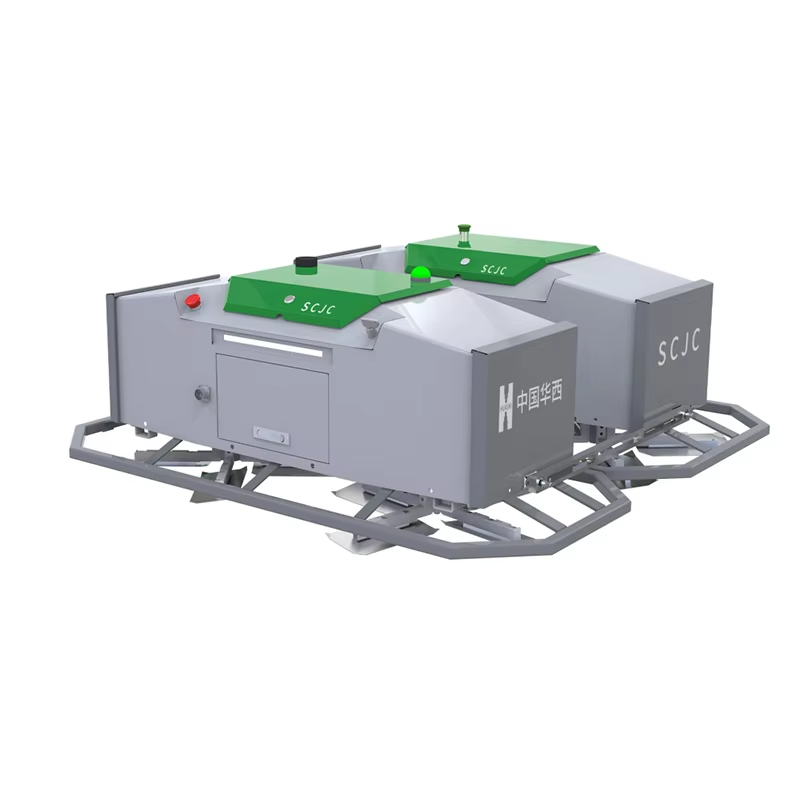
How Concrete Paving Robots Achieve Sub-Centimeter Accuracy and Consistency
Autonomous Navigation and Real-Time Sensor Feedback Loops
Today's concrete paving robots work thanks to their own navigation brains that run on pretty smart control software. The robots handle around 20 to maybe even 30 different sensor readings every single second from things like built-in inclinometers, those little laser receivers, and ultrasonic distance detectors too. All this helps them keep the surface level accurate within just 1mm while working. Instead of relying on old fashioned string lines which can get messed up easily, these machines constantly check themselves against what they should be doing and fix small problems right away before anyone has to go back later and fix big mistakes after pouring concrete. What does all this mean? Well, surfaces come out super flat even when going up hills or down valleys where it would normally be tricky. Plus, there's less need for so many workers standing around watching everything happen, and the finished product looks better from the start without needing extra fixes later on.
Integration of GNSS, LiDAR, and Inertial Measurement for Dynamic Calibration
Getting down to sub-centimeter precision happens when we combine different sensor technologies. GNSS gives us our location anywhere on Earth, LiDAR creates detailed maps of what's underneath, and IMUs keep track of movement and direction as things happen. When all these work together, they create a system that can adjust itself on the fly for bumps and dips in the ground without anyone needing to step in manually. What really makes this setup shine is how it checks real time sensor info against those BIM design files. This lets the machine tweak nozzle positions and screed heights automatically so concrete slabs stay exactly the right thickness throughout. According to research published last year in the Journal of Construction Engineering, contractors using this integrated approach waste about 17% less material than traditional methods. Plus, joints between sections just blend together smoothly instead of looking like patchwork, which matters a lot when pouring big areas.
Concrete Paving Applications Across Infrastructure Scales
Concrete paving robots deliver scalable precision—adapting seamlessly from expansive industrial slabs to constrained urban corridors—without compromising tolerance or throughput.
Industrial Slabs: High-Speed, Flatness-Optimized Placement for Warehouses and Logistics Hubs
When it comes to warehouse flooring, robotic pavers regularly hit those tough FF/FL flatness targets above 50, which is exactly what's needed for proper racking systems and AGVs to operate smoothly. These machines can lay down around 300 cubic yards each workday while keeping deviations under 3mm across the entire surface area, so there's no need for all that extra grinding after pouring. The robots come equipped with built-in sensors that monitor temperature changes and concrete consistency during placement. This real time feedback helps prevent problems with how the concrete cures when working on these massive single pour jobs. Companies report cutting their labor force needs by roughly 60% when switching to this technology. Plus, the finished floors pass all OSHA inspections for safety in those tall storage warehouses where stability matters most.
Roadways and Sidewalks: Autonomous Longitudinal Paving with Seamless Joint Control
Robotic systems guided by GPS technology keep lanes aligned within about 2 millimeters across stretches of kilometers long. These systems work hand in hand with slipform pavers to create roads at impressive speeds without breaking stride. When it comes to road joints, vibration compaction makes them much tougher against damage. We're talking roughly 40 percent fewer cracks compared to what workers can achieve by hand. Sidewalk construction gets a boost too through curb integrated pouring methods. This approach creates ADA compliant slopes and smooth transitions all in one go, which saves time on site. According to folks at the National Asphalt Pavement Association, this kind of automated work reduces entire project durations by around 34%. That's pretty significant when looking at large scale infrastructure projects.
Challenging Environments: Bridge Decks, Tunnels, and Retrofit Projects
Robotic units work wonders in tight spaces where regular machinery just won't fit, think tunnels or bridge surfaces for example. When applied to bridges specifically, these machines can measure deck thicknesses to within about 10 millimeters either way, which helps engineers calculate how much weight the structure can actually handle over time. During retrofit projects, scanning existing surfaces with LiDAR before pouring new materials allows for accurate planning of how thick the overlay should be. This approach cuts down on wasted materials by around 28%, according to industry data. The flexibility of these robotic systems has made them essential tools for city infrastructure work, especially when there are limited times available for construction and when performance standards simply won't budge.
Bridging Design to Reality: BIM Integration and Digital Twin Workflows for Concrete Paving
Concrete paving today connects what architects imagine with what actually gets built on site thanks to Building Information Modeling (BIM) working hand in hand with digital twins. Traditional CAD drawings just show what something looks like, but BIM goes way beyond that. It brings together not just the three dimensional shape of things, but also when they need to be done (that's the fourth dimension), how much everything costs (fifth dimension), and even environmental impact factors (sixth dimension). All this information lives in one place where everyone involved can access it. The result? Problems get spotted much earlier in the process. Contractors report seeing around a 15% drop in having to fix mistakes after construction has already started because these issues were caught before breaking ground.
Digital twins take things further by creating two-way communication channels. When robotic pavers are at work, their built-in IoT sensors send live data about factors like how wet the concrete is, how much it's vibrating, what the outside temperature reads, and any changes in height directly to the digital copy. Project managers can spot problems even when they're really tiny, maybe just 2 millimeters off spec, and jump in with fixes before those issues turn into bigger headaches later on. The design team runs simulations to see how roads will hold up over years of traffic wear and tear. Contractors figure out the best order for pouring concrete sections so there won't be those pesky cold joints where the material doesn't bond properly. Meanwhile, clients get to watch everything unfold through easy-to-use dashboards that show exactly where things stand. What we're seeing here is pretty revolutionary actually – combining BIM's ability to predict outcomes with the real time responsiveness of digital twins turns paving from something that gets done on site into a carefully managed engineering operation backed by solid data.
Operational Benefits and ROI of Adopting Concrete Paving Robots
Labor Optimization, Safety Improvements, and Reduced Rework Rates
When companies implement robotic paving systems, they typically need fewer hands on deck, somewhere around 30 to maybe even 50 percent less staff. Workers who used to do all the physical labor now find themselves in roles where they oversee operations, check quality standards, and monitor system performance. What this means in practice is that employees aren't exposed to those dangerous jobs anymore, like dealing with fresh concrete mixtures, doing the same motions over and over again, or lifting heavy loads day after day. Fewer people getting hurt from back strain or other muscle injuries makes sites much safer places to work. Getting surface flatness down to under 3 millimeters per 10 meters has another big benefit too. Contractors report cutting down on rework by roughly 15% when specs are met right the first time. No more grinding away at surfaces or filling cracks later on, which saves time and money. Sites get handed over faster, schedules become more reliable, and companies avoid spending extra cash on fixes that shouldn't have been needed in the first place.
Case Snapshot: Automated Paving Deployment on a 45,000-sq-ft Warehouse Floor (2023)
In early 2023, an industrial site used robotic paving equipment to lay down the foundation for a massive 45,000 square foot warehouse. The whole job took only 72 straight hours to complete, which is roughly 40 percent quicker than what we normally see with traditional methods. Throughout this process, the robots kept things pretty level too, staying within about 1.5 millimeters of elevation across the whole slab surface. They even met those tough FF 50 FL 35 flatness standards right out of the gate without needing any fixes later on. Safety was another big plus point here since nobody got hurt during all that dangerous work with wet concrete going on. Labor expenses actually went down by around 37% because they managed crews better. All told, this tech saved the company somewhere around ninety two thousand dollars directly from cutting back on fixing mistakes, shortening timelines, and not having to pay so much extra time for workers.
FAQ
How do concrete paving robots achieve sub-centimeter accuracy?
Concrete paving robots achieve sub-centimeter accuracy through the integration of GNSS, LiDAR, and inertial measurement units that provide real-time sensor feedback, enabling dynamic calibration and precision adjustments.
What are the benefits of using robotic systems for concrete paving?
Robotic systems offer benefits such as labor optimization, improved safety, reduced rework rates, and high-speed, accurate concrete placement that meets stringent flatness standards.
How does BIM integration enhance the paving process?
BIM integration allows for the identification of potential problems early in the process, reducing rework and ensuring the project aligns with planned timelines and costs.